Latest Posts

Chocolatada in Yanque, Peru: an amazing day for dos Canadienses

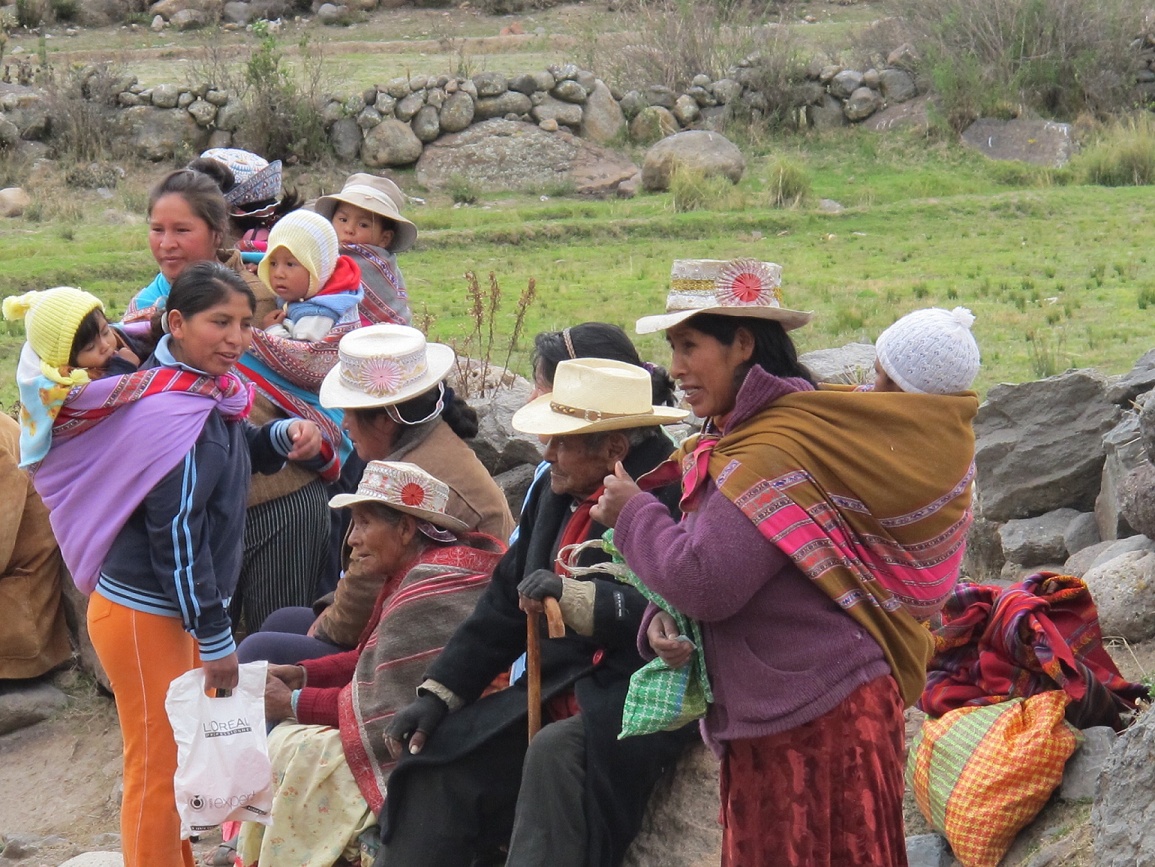
Waiting for the Choloatada Waiting for the Choloatada

Early this morning, even earlier than this usually happens, I was awakened to the sounds of a loudspeaker announcing something in rapido Espanol.  Often, trucks will drive through a neighbourhood announcing “platinos, papayas, paltas, narrrrrranjas” over and over and over, full blast, at what seems to me to be an ungodly hour.  In reality, most people here have probably been up and working for a couple of hours, and Doug and I are probably the last two people still lounging in bed in this bonito Andean pueblo.  

Today when I heard this, I just figured it was a fruit vendor, so I pulled on my eye mask, rolled over and tried to go back to sleep.  No good!  It was getting louder and the announcer’s voice was being drowned out by the high-pitched squeals of niños. 

“OK, I better check this out,” I said to myself, and so I opened the curtains in our hotel room at the Killiwasi Lodge and saw hundreds of children running through the fields across the way.  I look at my watch and its only 5:30.   What the heck?   At first, it looked to me like the kids were on an Easter Egg Hunt, but then I saw a long line of parents waiting outside a small building on the other side of the field. 

“Ah, I get it, it’s the Chocolatada.

Last night, while we were sipping pisco sours in a little café on the square in Yanque – there will be more on this later, as I have formed a bit of an addiction- the owner’s son told us excitedly that Papa Noel was going to be visiting en la mañana and that there was going to be a Chocolatada.  Chocolatadas, extravaganzas of hot chocolate, panettone, and regalos– presents- are held around South America por Navidad, sometimes in schools and at other times for entire communities.   As part of their annual Christmas party, Up Close Bolivia held a terrific Chocolatada at the pre-school in Mallasa just before we left Bolivia, and the kids loved it, so I definitely wanted to check this one out.

I quietly dressed and snuck out of the room, trying not to wake Doug, who was hoping to sleep off a whopper of an Andean cold.  Heading for the growing line of kids and mothers, most dressed in the traditional clothing and hats of the region, I was stunned by the number of people who were waiting at the gate of the hotel, too many for me to count.

I noticed a man taking pictures so asked him “que pasa?”   to which he replied In clear English, “my family is hosting a Chocolatada for the town.”    “Wow,” I exclaimed “necissita assistar?” or something like that, which was not correct Spanish at all, but he got it and responded “si, si, si” and led me through the gate and into the back where two huge vats of hot chocolate were simmering over an open fire, attended by a beautiful Collagua woman.  Collagua and Cabana are the two indigenous peoples in the Colca Valley and pre-date the Incas. 
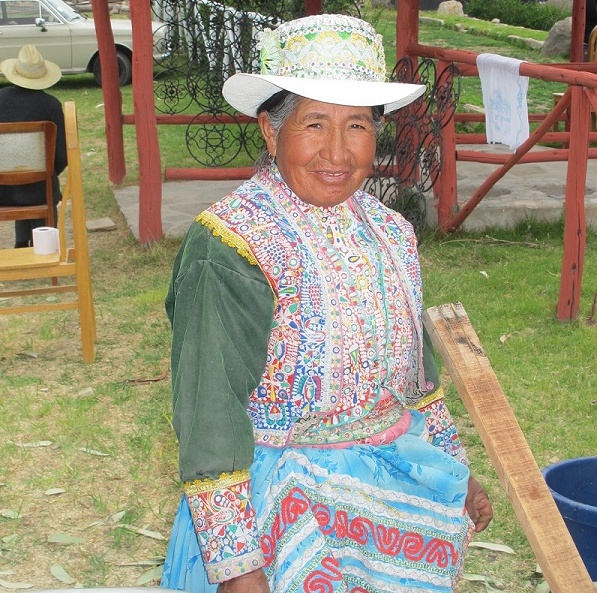
Mi Amiga, Victoria Sarayasi a beautiful Collagua woman.
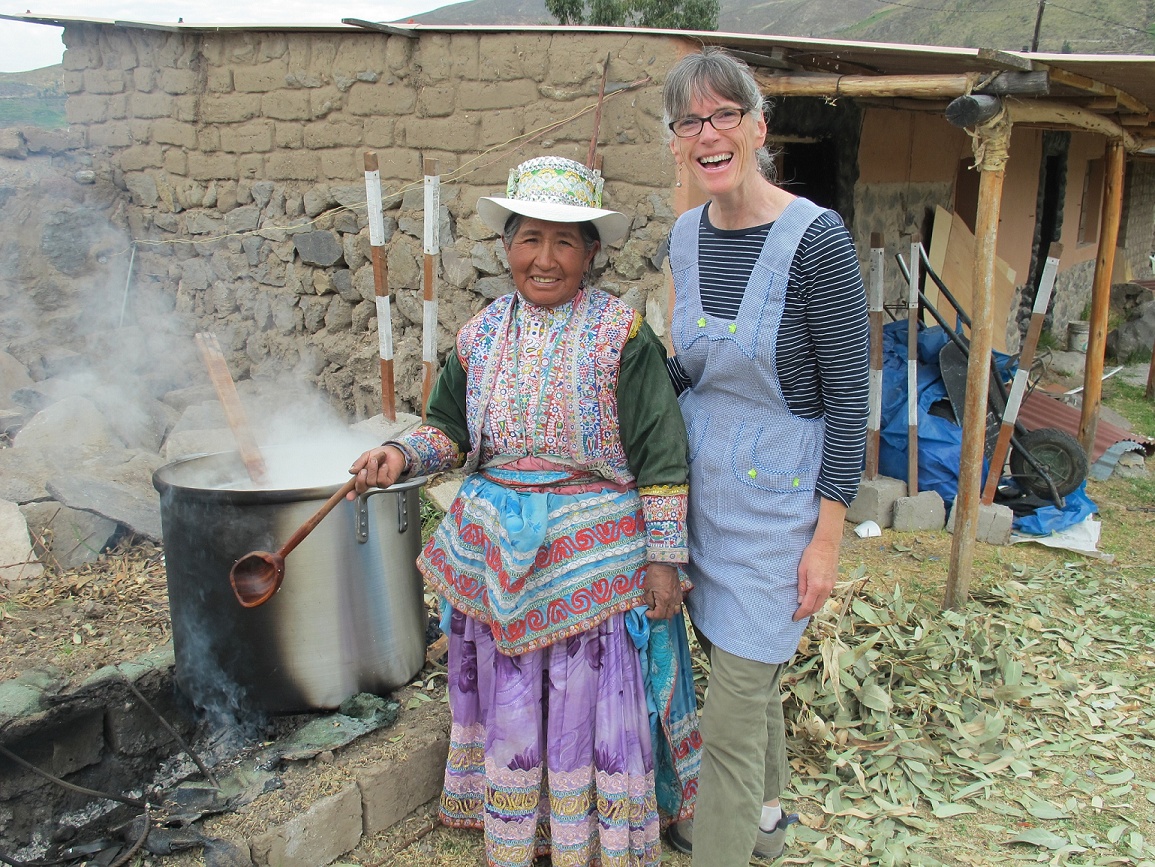
Mi Amiga, Victoria Sarayasi a beautiful Collagua woman.

I was immediately welcomed by the extended family of grandparents, mothers, fathers, aunts, uncles, cousins, and children.

“Cual es su nombre?” I was asked by who appeared to be the matriarch of the familia. 

“Alison,” I replied. 

“Bienvenidos, Aleeson,” she shouted over the blaring Christmas music and gave me a huge hug.  She then proceeded to introduce me to everyone. 

The family, who are from Arequipa, have been hosting this event in Yanque for the past ten years at what was once a small hotel, but is now, I later learned, the country house of Dr. Giovanni Salar, the man I first met.  He and his six brothers and their families provide the funds and host the event.  It’s a huge under-taking, but everyone seemed to know their roles and were being given directions over a loudspeaker, in between Jose Feliciano singing Feliz Navidad and Bing Crosby’s White Christmas, while the growing throngs waited outside.

Each person is served hot chocolate and given Christmas presents- toys to the children and clothing to the adults.  According to Gaby, Giovanni’s daughter, who spoke excellent English, the entire family knows their responsibilities, but she was thrilled that I had offered to help because they were short this year.

“Hey, I can get more help. I’ll be right back,” I said, and flew across the field to get Doug, who I knew would hate to be missing this.

“Dugla, Dugla, get up, you gotta come help with the Chocolatada.”
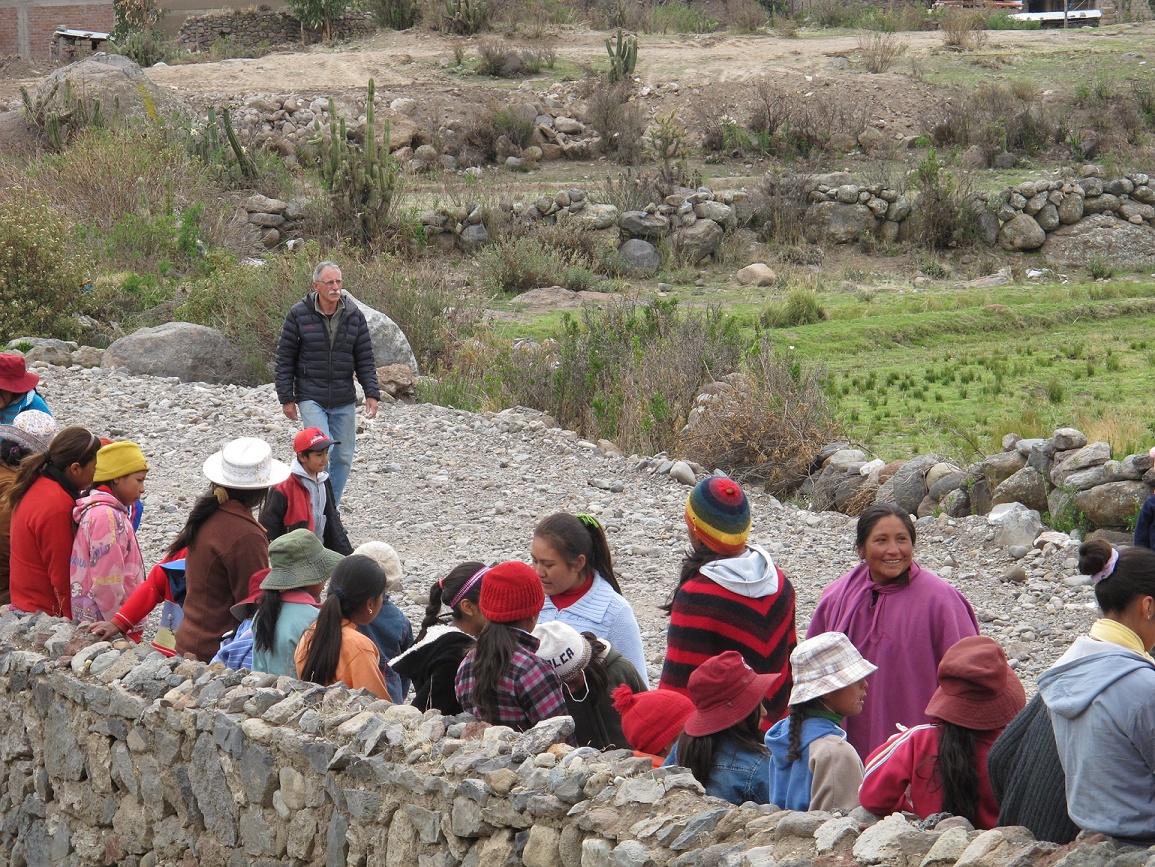
Straight out of bed and off to a Chocolatada

Straight out of bed and off to a Chocolatada

It was an unbelievably wonderful morning.  The children were so adorable and everyone was so appreciative.  The children were funneled into lines, first to receive a gift, and then hot chocolate.  I was in charge of crowd control, dividing the niños and niñas into separate lines. 

“Niños aqui, Niñas acqui, “Niños aqui, Niñas acqui, “Niños aqui, Niñas acqui…”
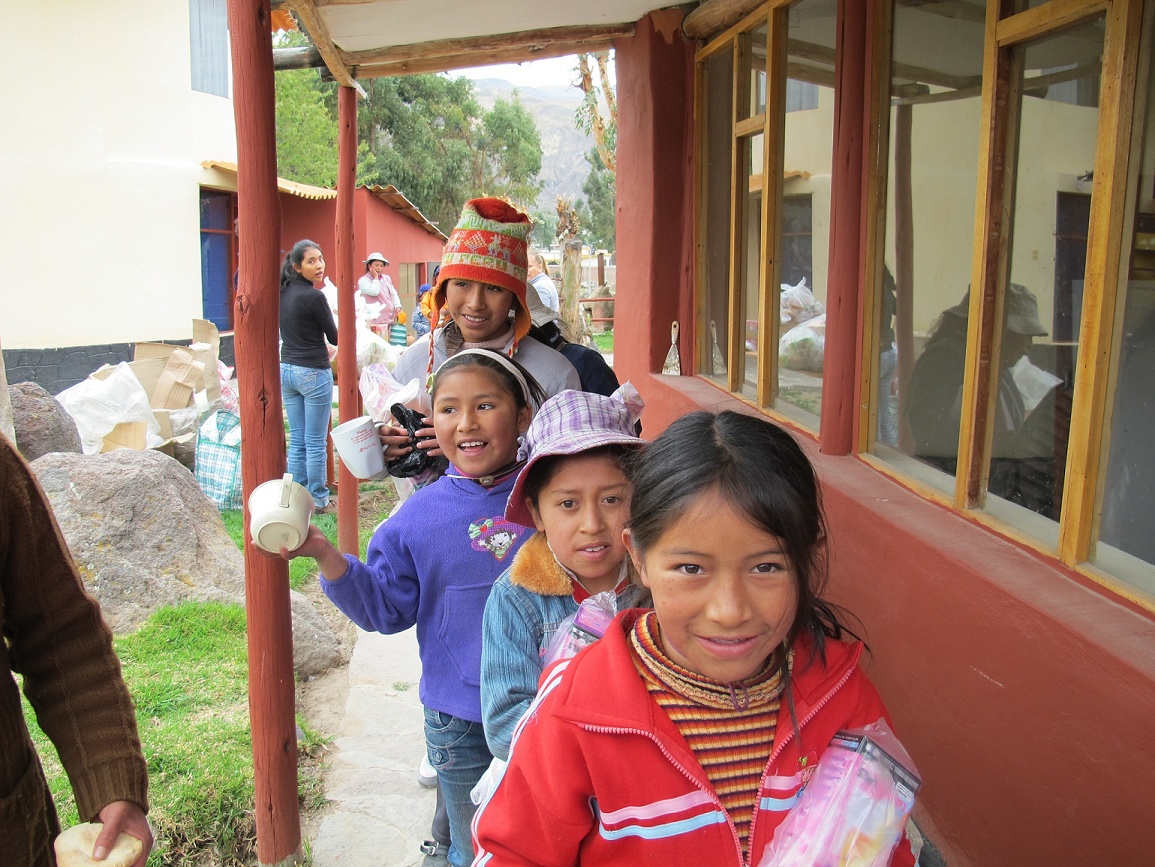
Lining up for hot chocolate, cups ready!
Lining up for hot chocolate, cups ready!

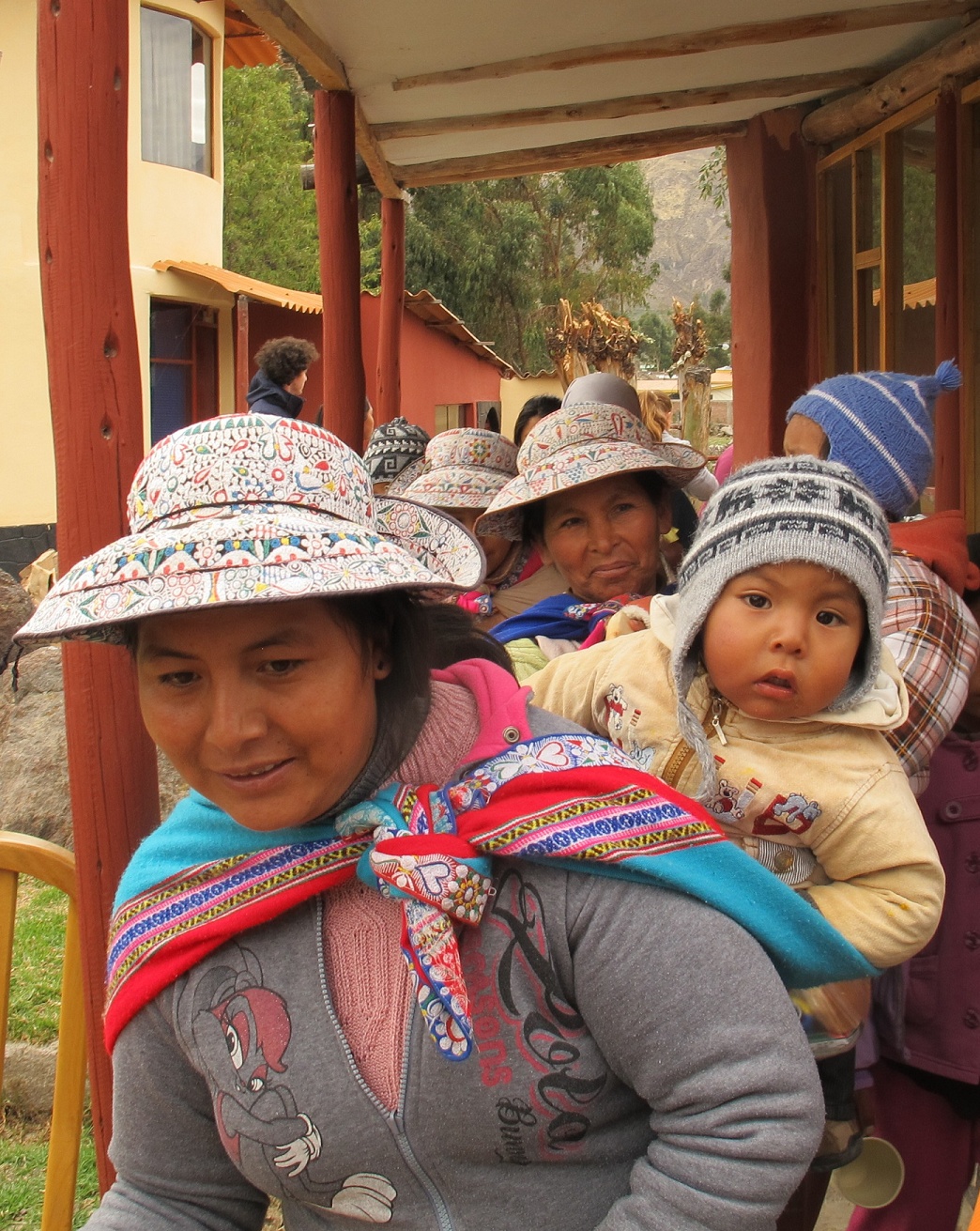
Mama y Nina
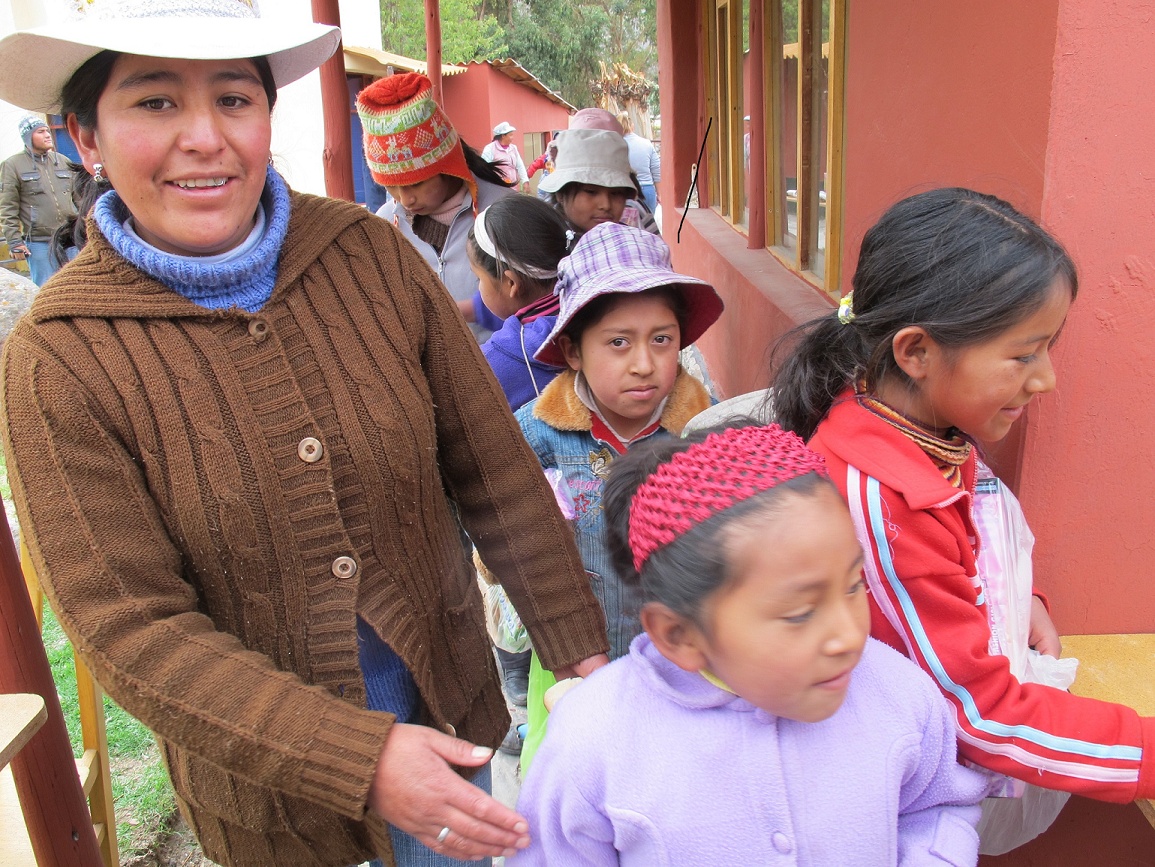
Mama y Nina

Vanessa, a lovely woman who works at our hotel, Killawasi Lodge, and her daughter Leonella.

Vanessa, a lovely woman who works at our hotel, Killawasi Lodge, and her daughter Leonella.


Dugla helped serve the hot chocolate.  Everyone brought their own cups- some used cups, others pop bottles, baby bottles and even small pots. 
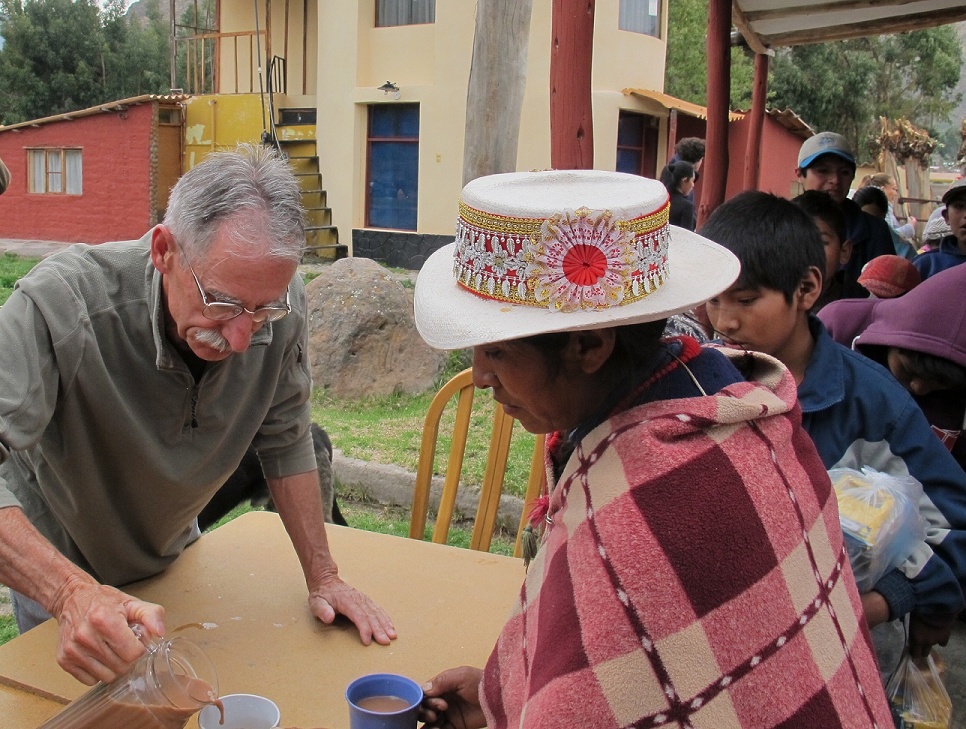
IMG_9091 (2)

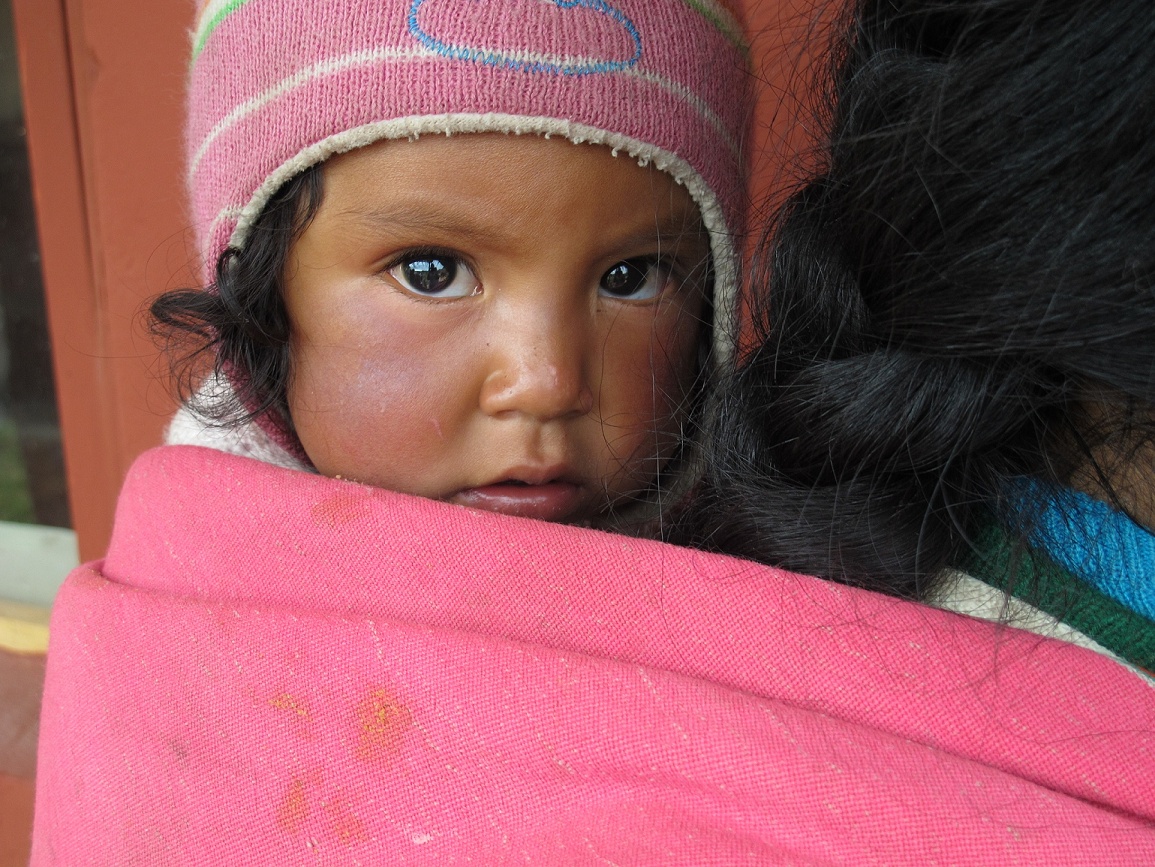
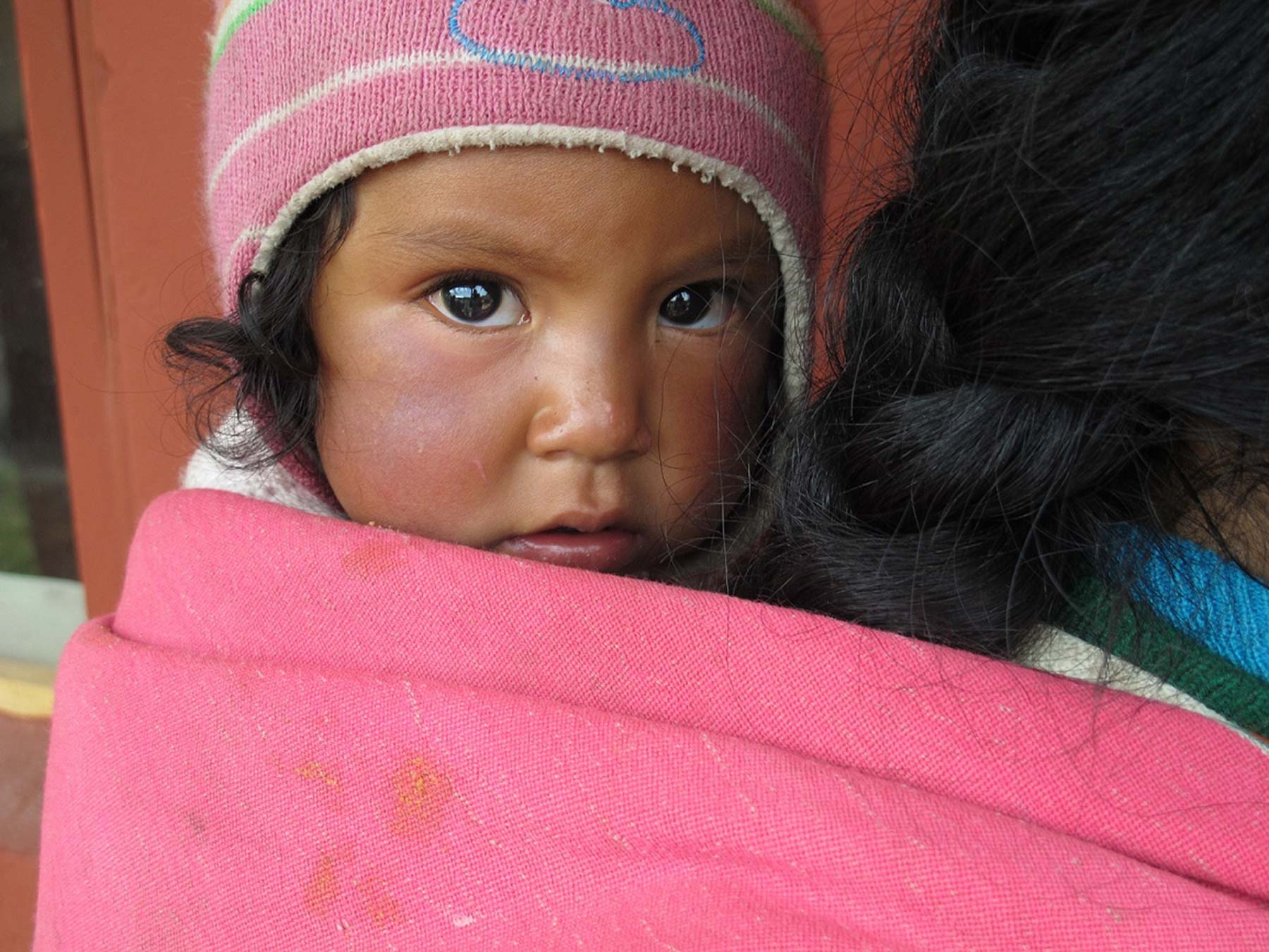
Eyes the colour of chocolate and heart-melting.

Eyes the colour of chocolate and heart-melting.


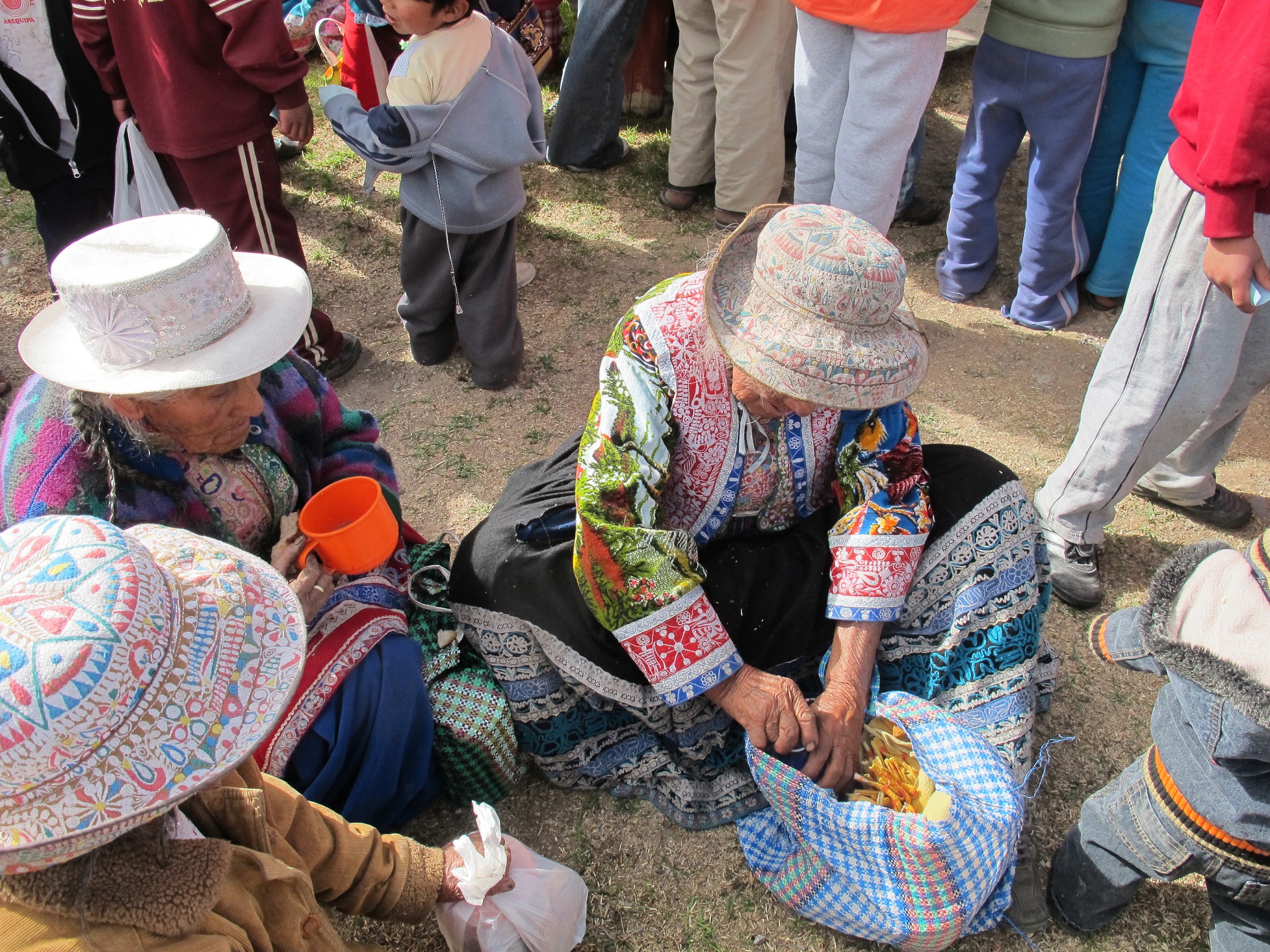
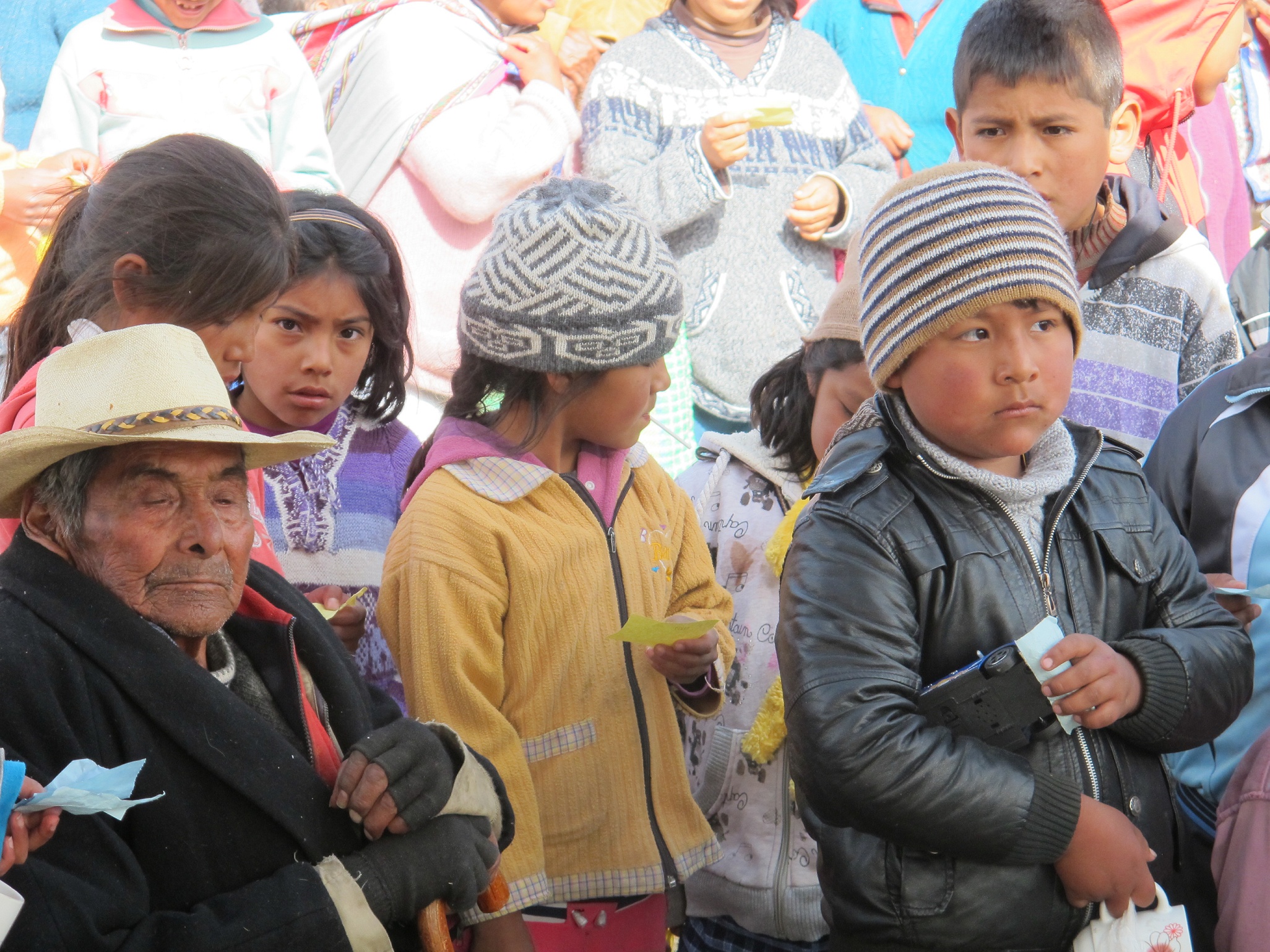
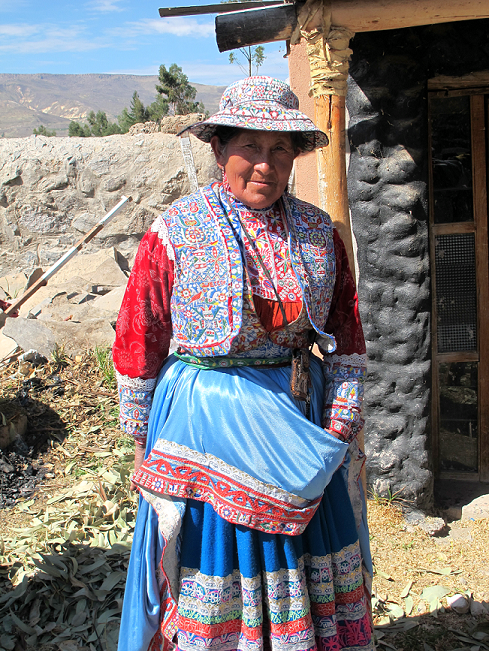
Perhaps the most touching moments of the morning were when we served the elderly people of the community, each carrying their little cups.  The women, weathered and wearing traditional clothing, and the men in their sombreros and sandals, many using canes, reached out to take our hands or to give us a kiss.
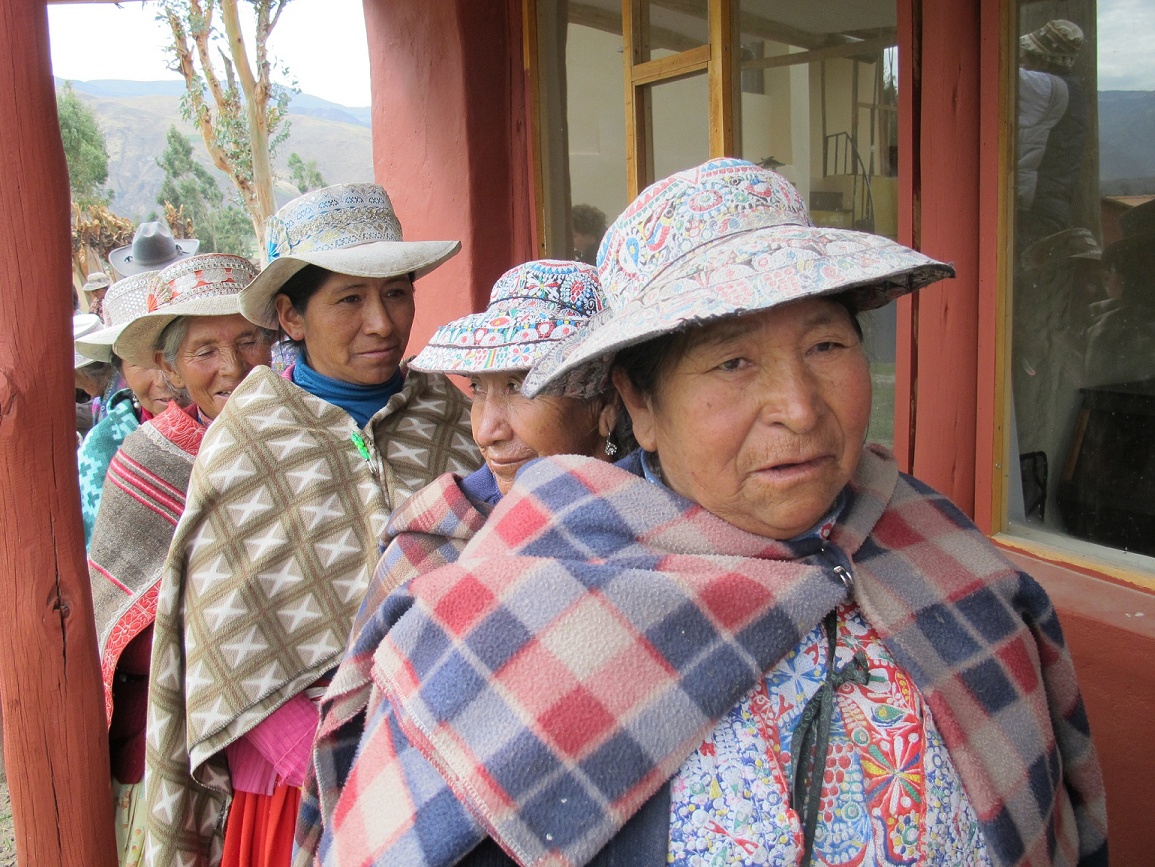
Signoras
Signoras

Abuelo y los ninos

Abuelo y los niños

No seats required at a Chocolatada
No seats required at a Chocolatada

Corcina,a beautiful Cabana woman

A Beautiful Cabana Woman


“Muchos gracias, muchos gracias por todos,”  was repeated and repeated.

Really, it is us who should be saying “muchos gracias.”  It was an amazing experience and we both felt so privileged and grateful to have been a part of it.


And so to Giovanni Salar and his family,and to all the people of Yanque, Peru, Doug and I say a huge gracias and Feliz Navidad.
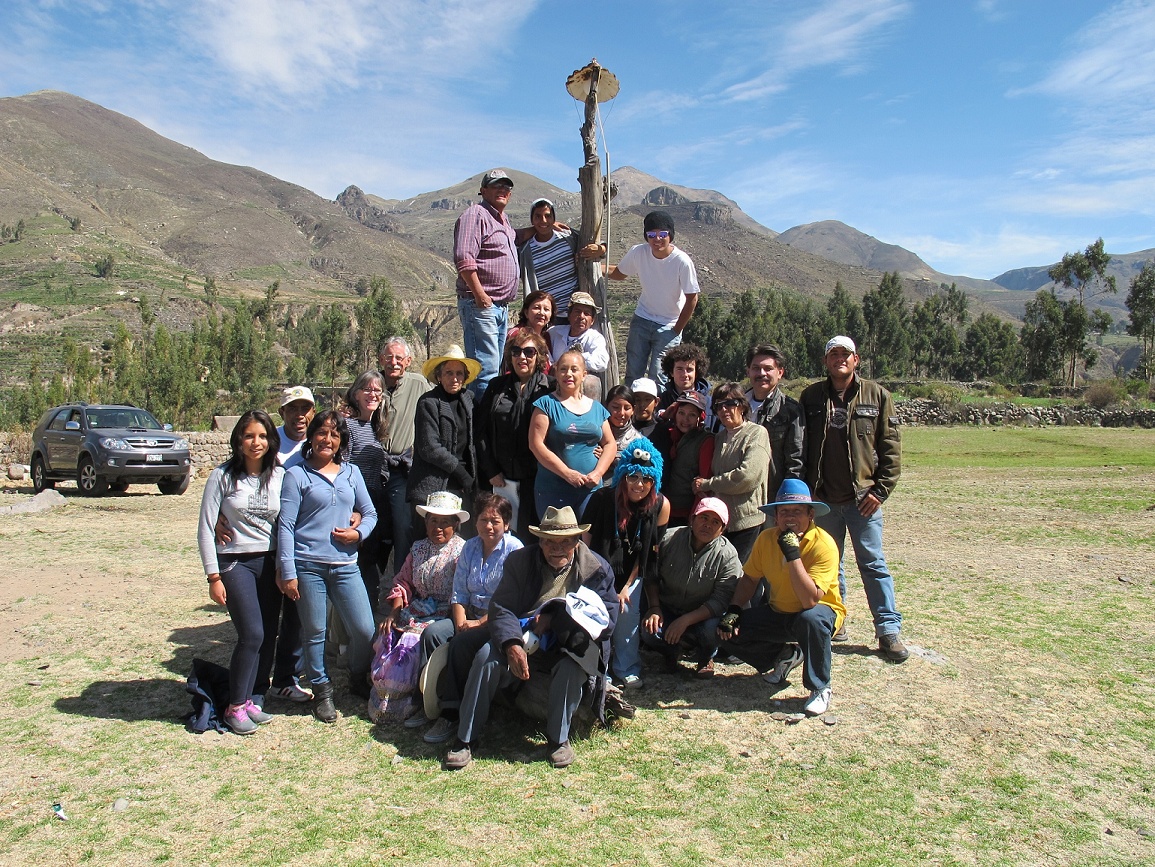
 

Familia de Giovanni Salar
Familia de Giovanni Salar


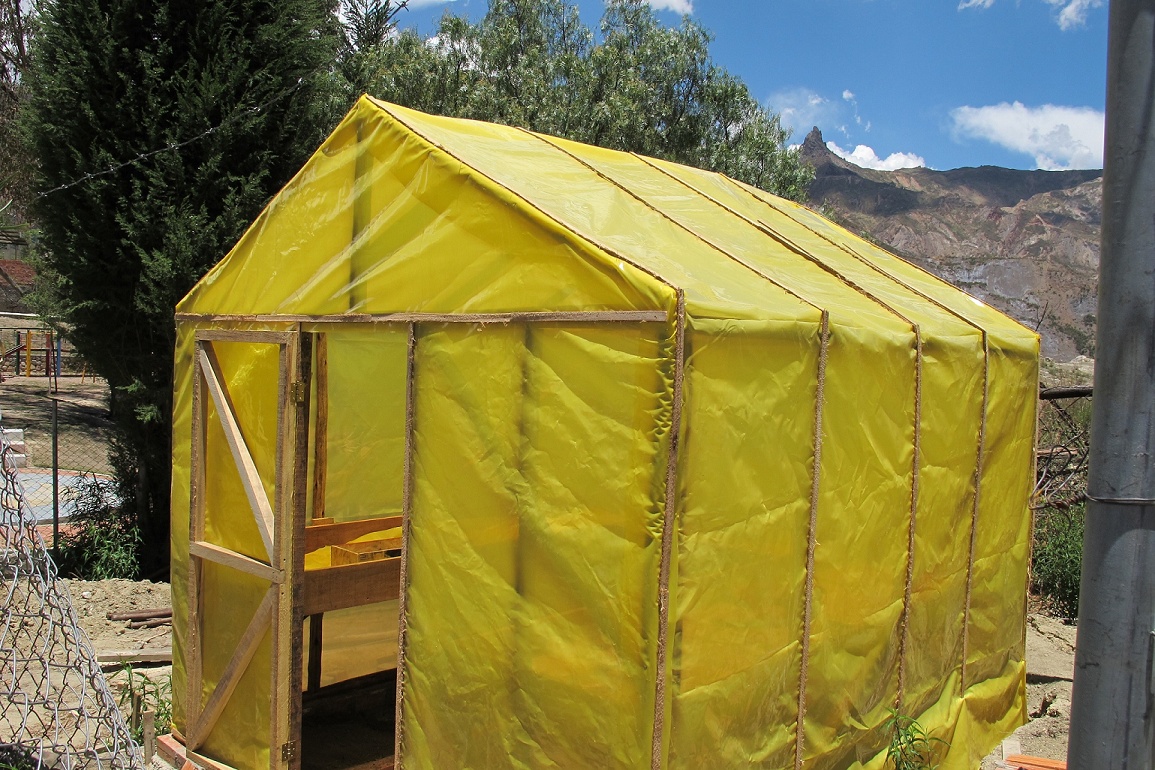
An Invernadero for the Valley of the Moon Children’s Centre

A Greenhouse for the Valley of the Moon Children's Centre

A Greenhouse for the Valley of the Moon Children’s Centre

A Greenhouse for the Valley of the Moon Children’s Centre


“When should we start building the Invernadero?” Doug asks Rolando on our first morning with Up Close Bolivia.

”Ahora,” Rolando responds, “now,” and the next thing we know, Rolando and Emma have whisked us off to the hardware shops in Calacoto, a southern suburb of La Paz, to buy everything they will need to build a greenhouse.  As in many areas of La Paz when it comes to selling goods, we arrive at a street that has about twenty little hardware stores, each selling identical products.  There are streets and alleys across the city and in the central market specializing in just about everything. Need a camera?  Go to the street in central La Paz with dozens of stores selling camera equipment.  Or, how about a wedding dress?  Just head to the bridal shop street!

With funds generously donated to Up Close Bolivia and without hesitation, Rolando leads us to his favourite shop and the dos carpinteros start collecting materials; nails, screws, anti-termite stain, paint-brushes, and metres of yellow-tinted plastic. Apparently the sun here is so strong that clear poly doesn’t last.   And, just as I am beginning to glaze over in the midst of all of this talk of length of nails, size of screws and thickness of poly, Emma appears from across the street with four salteñas, the delicious empanada-like pastries available from little stalls every morning around Bolivia.  The minute I bite into my first salteña, I am brought back to life, although I may not be the prettiest sight.  The art of salteña- eating requires a bit of skill in order to avoid the sweet, savoury, spicy juices from running down your chin and all down your front!  I make a mental note to get a lot more practice in the coming weeks, as I reach for a stack of napkins.

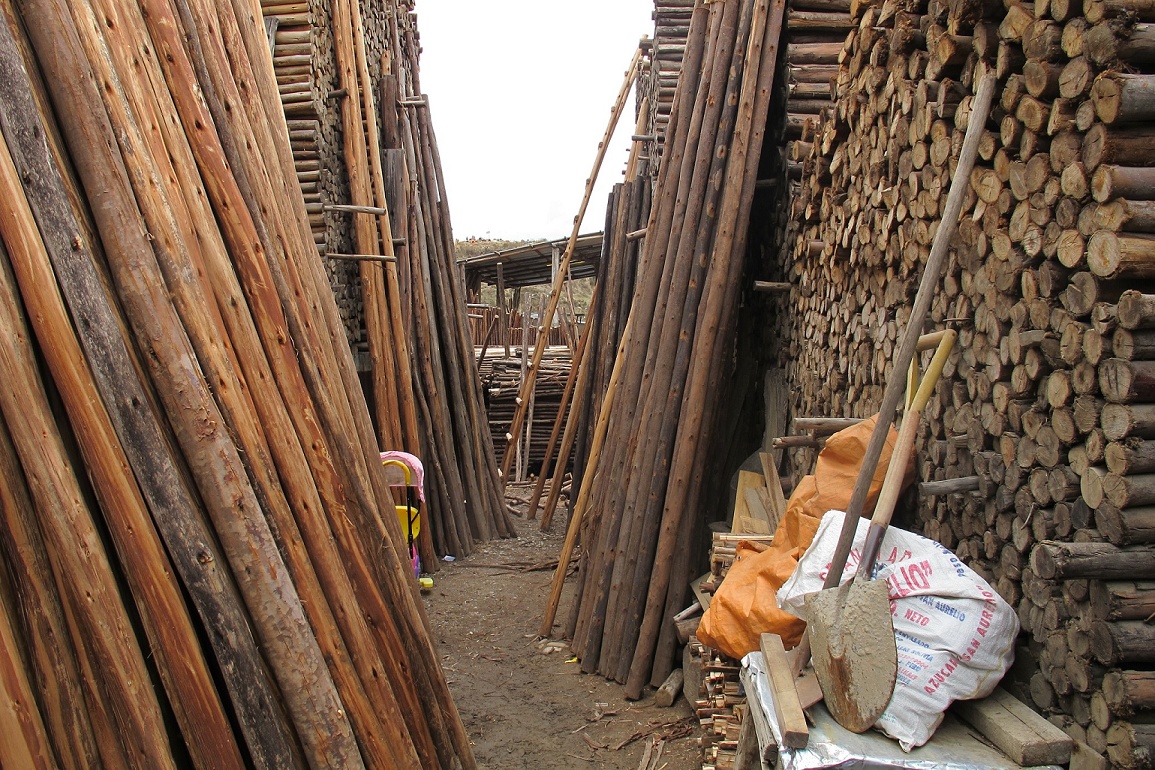
Once we have our hardware, it’s off to the “pole lot” to buy the poles for the greenhouse structure.

Buying the poles for the Greenhouse

Buying the poles for the Greenhouse


Then we jam the poles into a taxi for delivery to Mallasa.  Doesn’t every lumber shop deliver by taxi?

Pole Delivery, by taxi!

Pole Delivery, by taxi!

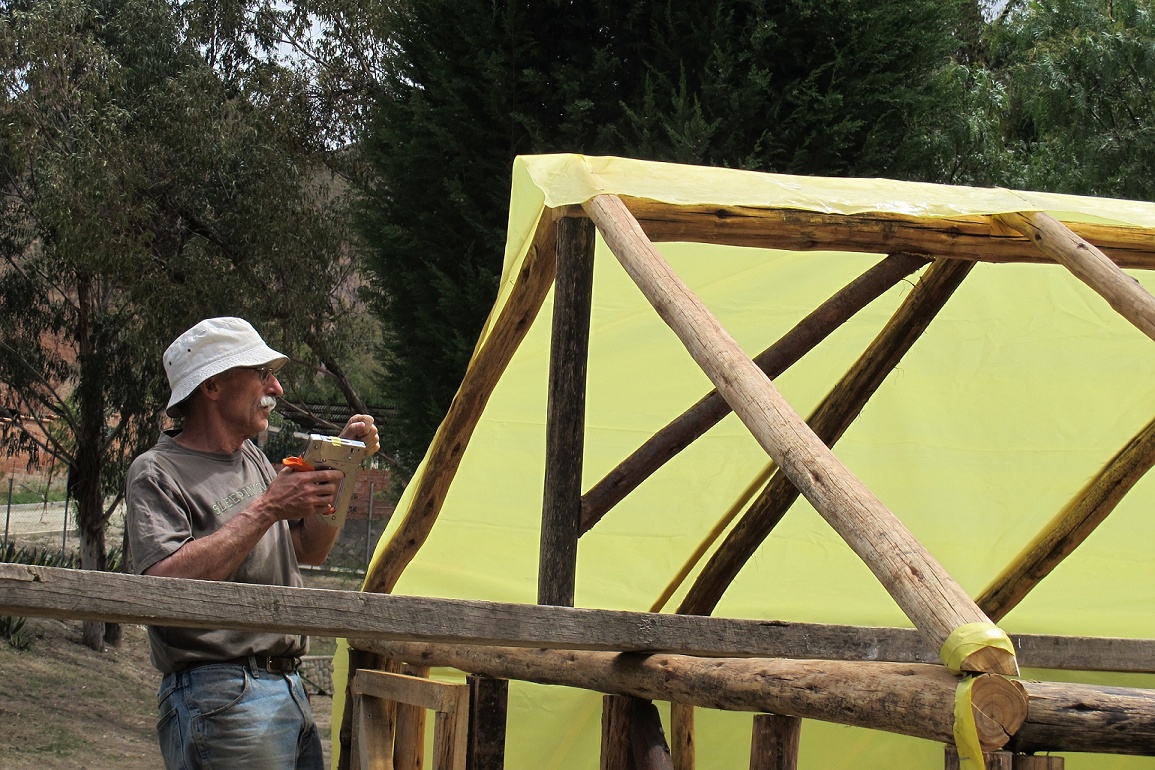
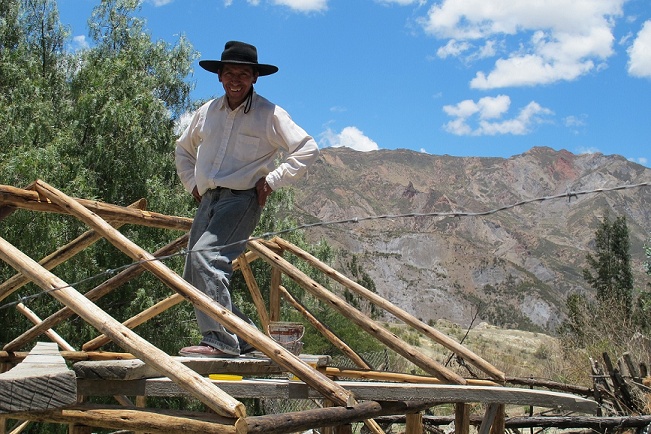
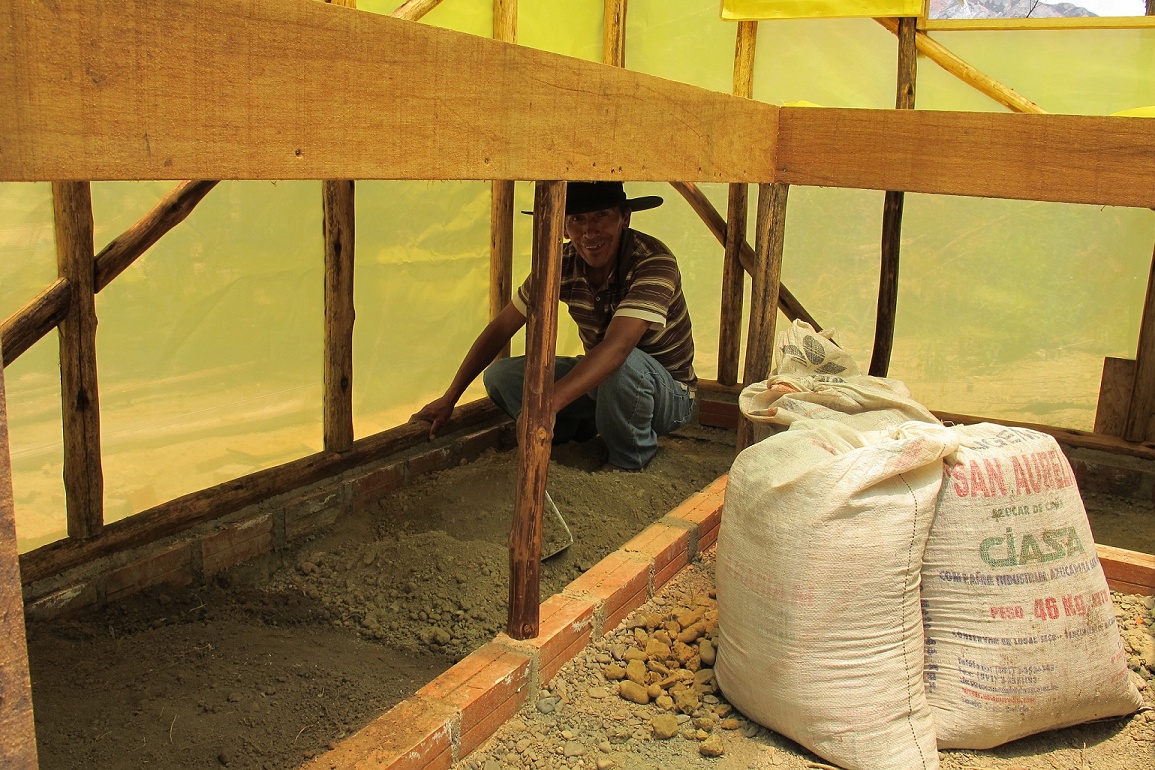
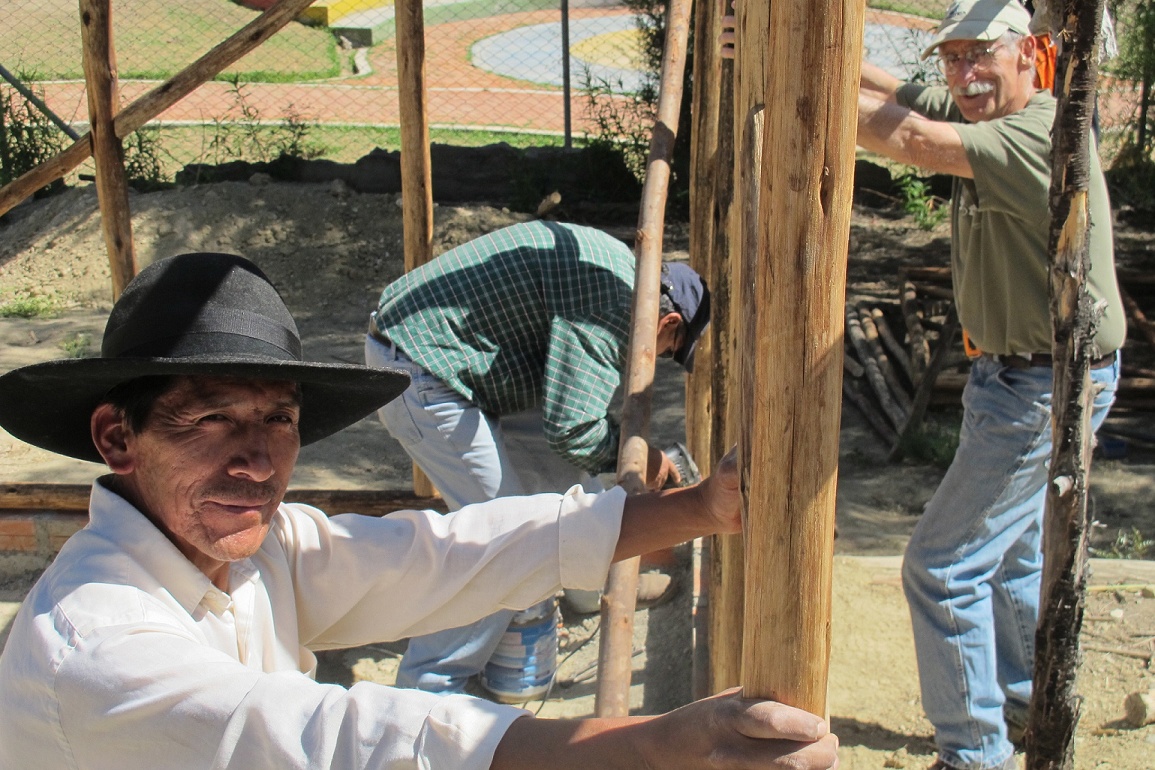
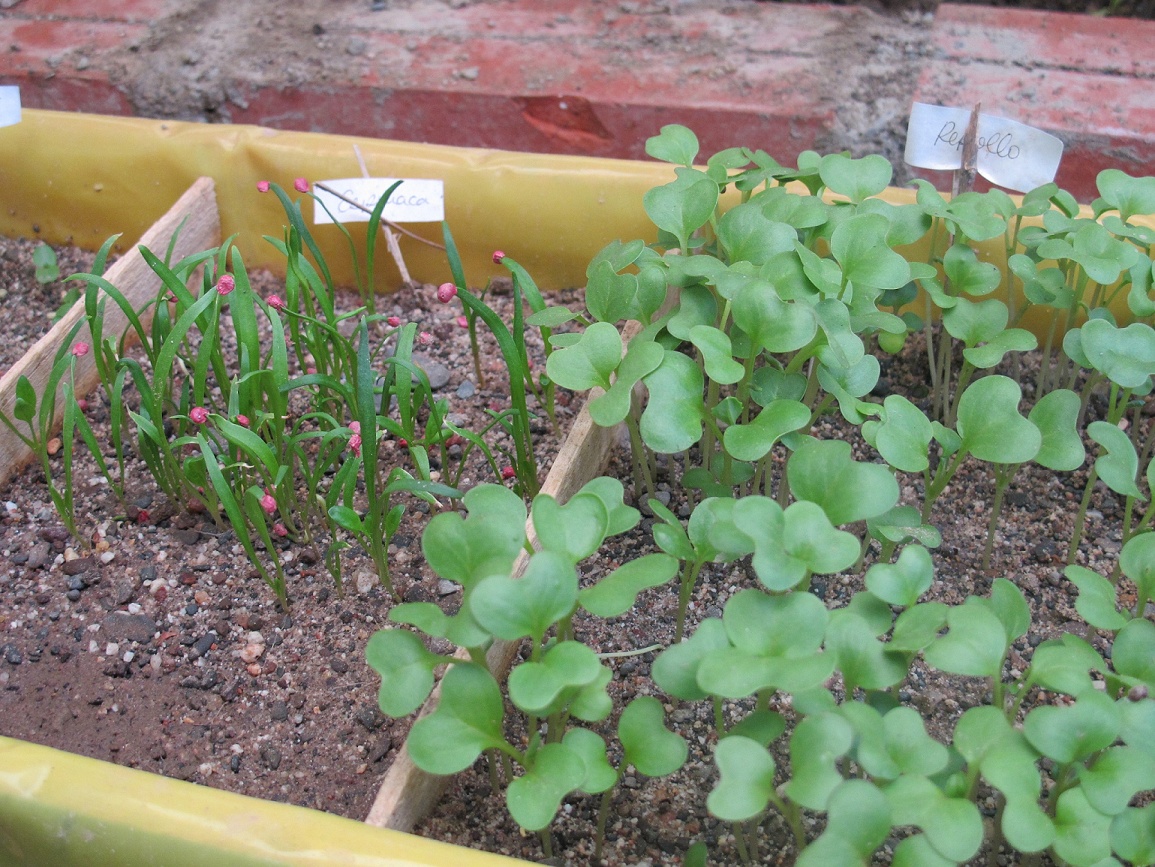
Over the coming weeks, Doug, with the assistance of Walter and Rolando built a 3 metre square greenhouse in the grounds of the Valle de la Luna Children’s Centre.  Working with the hardwood poles required some different techniques, new to a Canadiense carpintero.  As Doug explained, “the wood is so hard that not only do you have to pre-drill the holes, you have to dip the screws in grease so that you don’t burn the *@x! out of the drill.” Every day, we watched with excitement as the greenhouse took shape.   Walter, an agrologist by trade, mixed the soil carefully and chose a variety of seeds, Maxima was thrilled at the prospect of cooking with fresh greens and the niños ran around the playground calling out, “hola, hola, hola, señor.”   From the brick and hand-mixed concrete foundation to the seedlings sprouting in their beds, the project took about four weeks.  Not fast enough for a multi-tasker like Doug, who was working part-time while also taking Spanish classes from the lovely Wendy, but warp-speed to the rest of us!

Carpintero Canadiense

Carpintero Canadiense


Walter , Carpintero Bolviano

Walter , Carpintero Bolviano


Soil Building

Soil Building


Carpinteros- Rolando, Walter y Dugla

Carpinteros- Rolando, Walter y Dugla


Dos Carpinteros- Rolando y Dugla

Dos Carpinteros- Rolando y Dugla


Seedlings in the new Greenhouse

Seedlings in the new Greenhouse


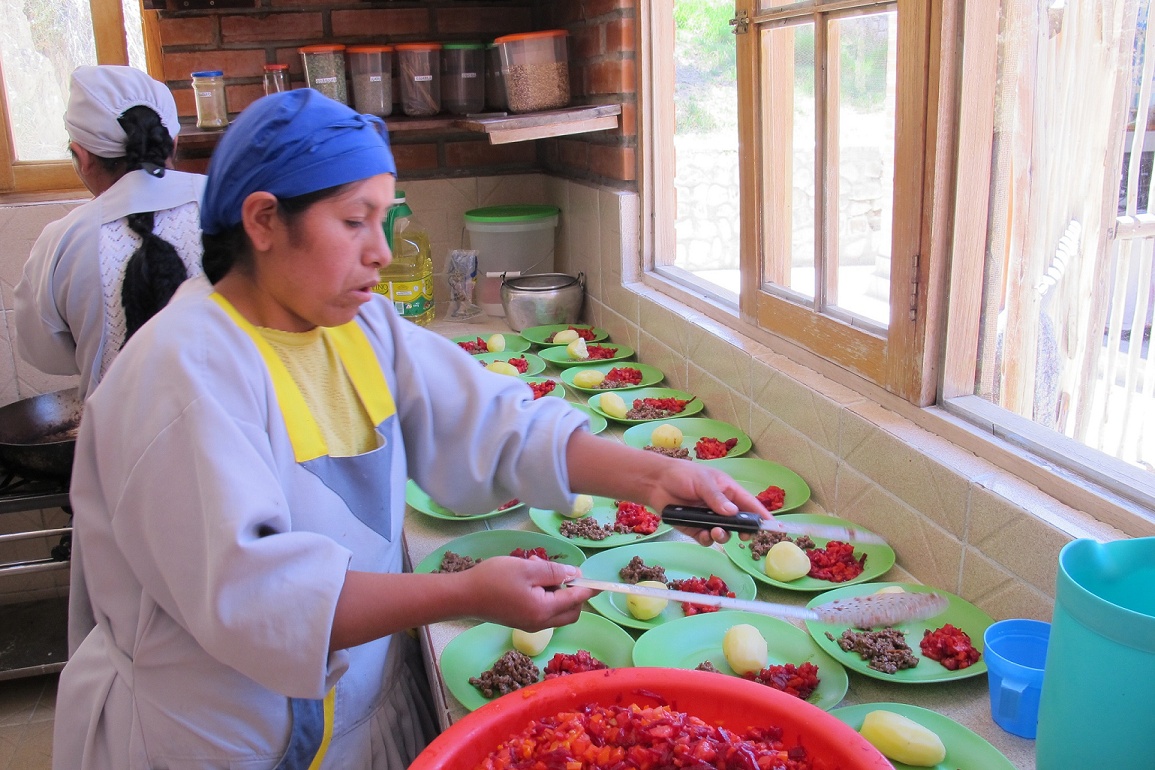
Kitchen Stories- Maxima and Maria

Plating Lunch Maria plating Lunch at Valle de la Luna Pre-school in Mallasa, Bolivia

“Que es un sopa de feo, hoy?”, I ask in my stilted Spanish, feeling quite proud of myself! 

Maxima and Maria give each other a sideways glance and a little roll of the eyes.

Que? I say, Que?

They burst out laughing.  “Oh Aleeson,” Maxima responds,” no, es un sopa feo, es sopa des fideos!” 

It takes me a minute, but I finally clue into my mistake.  I have asked the cooks if the soup is ugly-feo-, instead of asking if the soup has pasta- fideo- in it!  And so goes another day working in the kitchen as Up Close Bolivia volunteers at the Valle de la Luna pre-school in Mallasa, Bolivia.

Maxima

Maxima

For the past month, Doug and I have been volunteering at the pre-school, me in the kitchen and, occasionally, in the classroom and Doug building a greenhouse.  Each day left us feeling inspired, happy, confused (mostly me!) well-fed and completely exhausted!  It seems that everyone blames their ailments on the altitude, so we like to think that this is the reason for the exhaustion and not because we are a couple of light-weights!

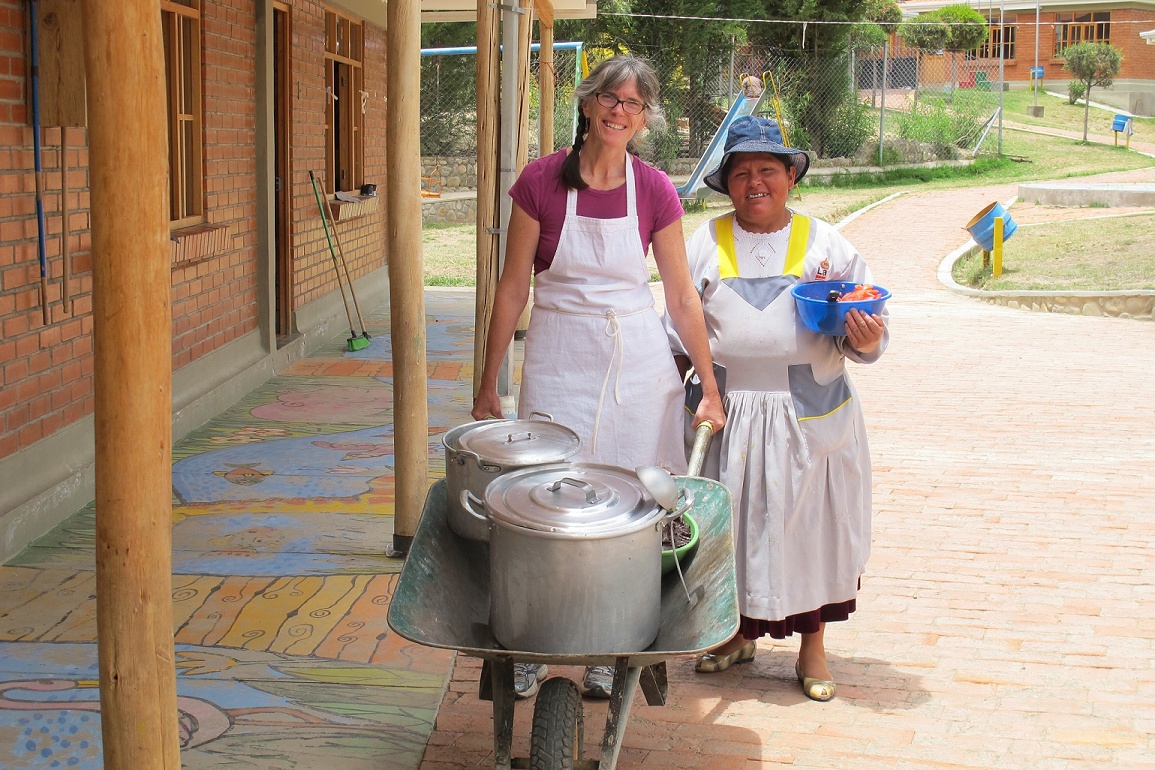
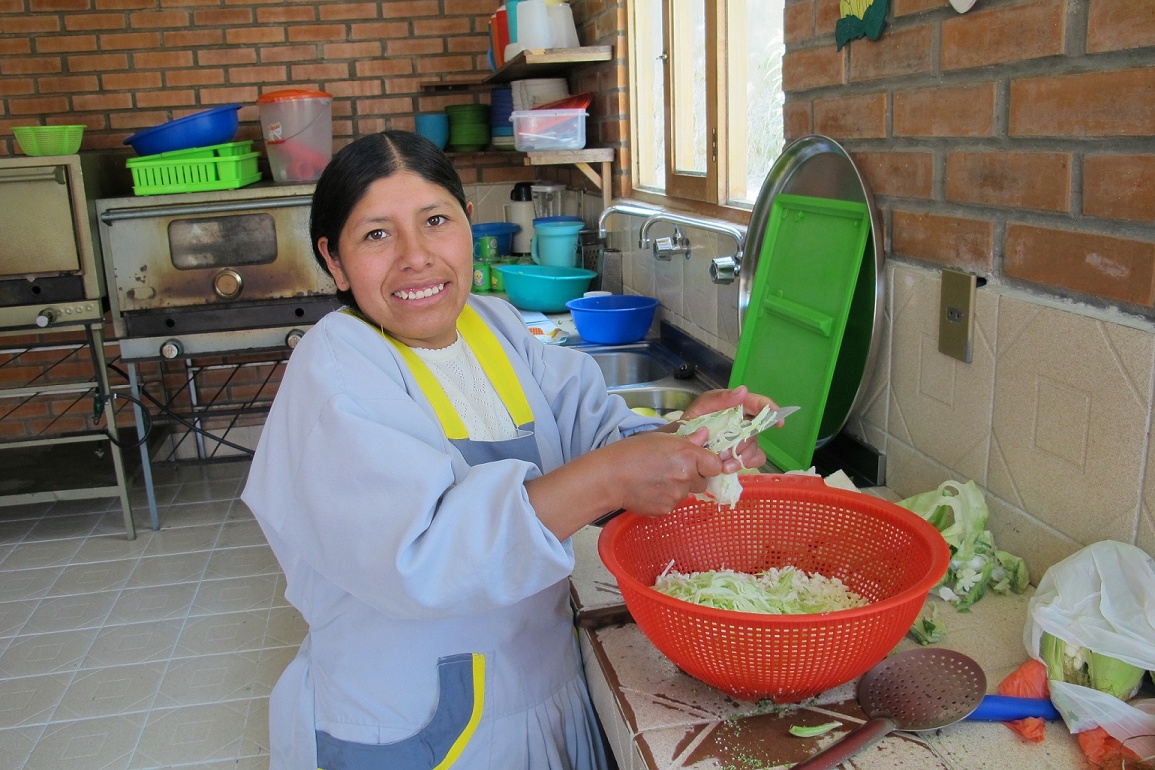
From Monday to Friday, I prepared the vegetables, washed dishes and served lunch  (delivered in a wheelbarrow!) to 80 pre-schoolers alongside Maxima, the head cook and her assistant, Maria.  Being Aymara, the largest indigenous population in Bolivia, both women have waist-length hair braided and tied together with a single ribbon, wear traditional hooped skirts, known as polleras that are often velvet or brocade, on top of layers of lace under-skirts, brightly patterned aprons and adorable flat shoes, often in different shades of patented  leather.  Once things get going in the kitchen, they both don headscarves and an official kitchen smock.

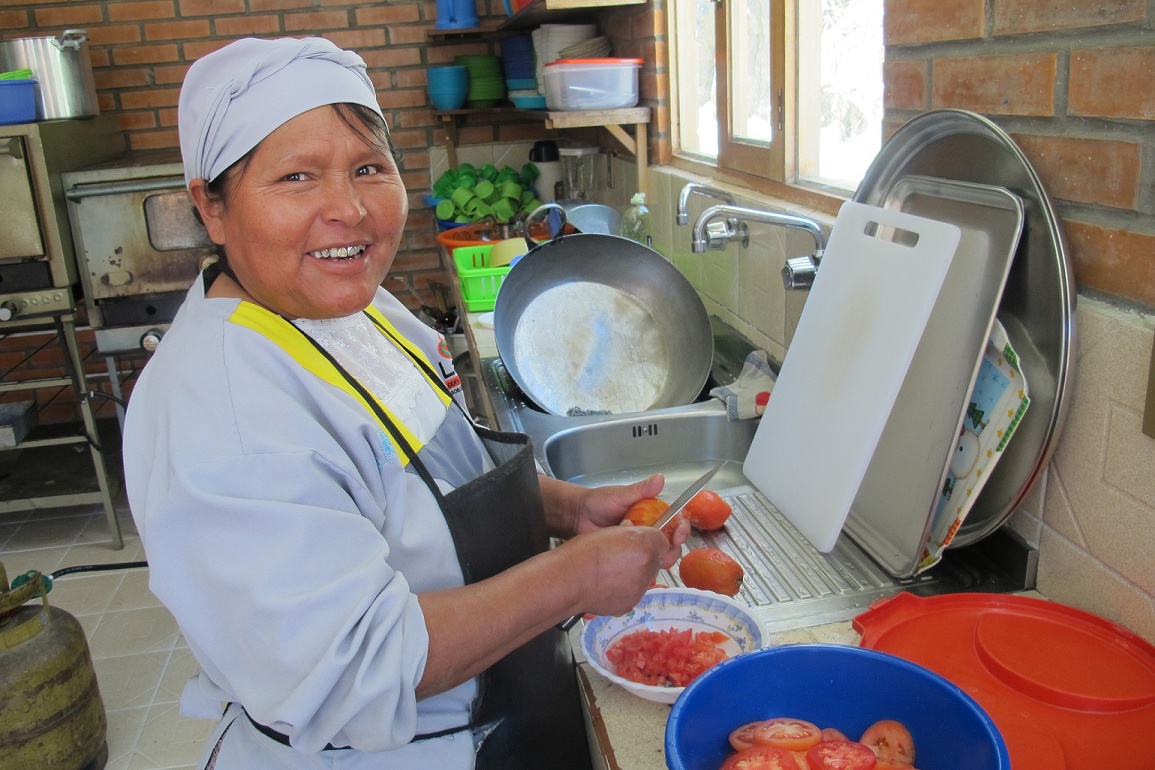
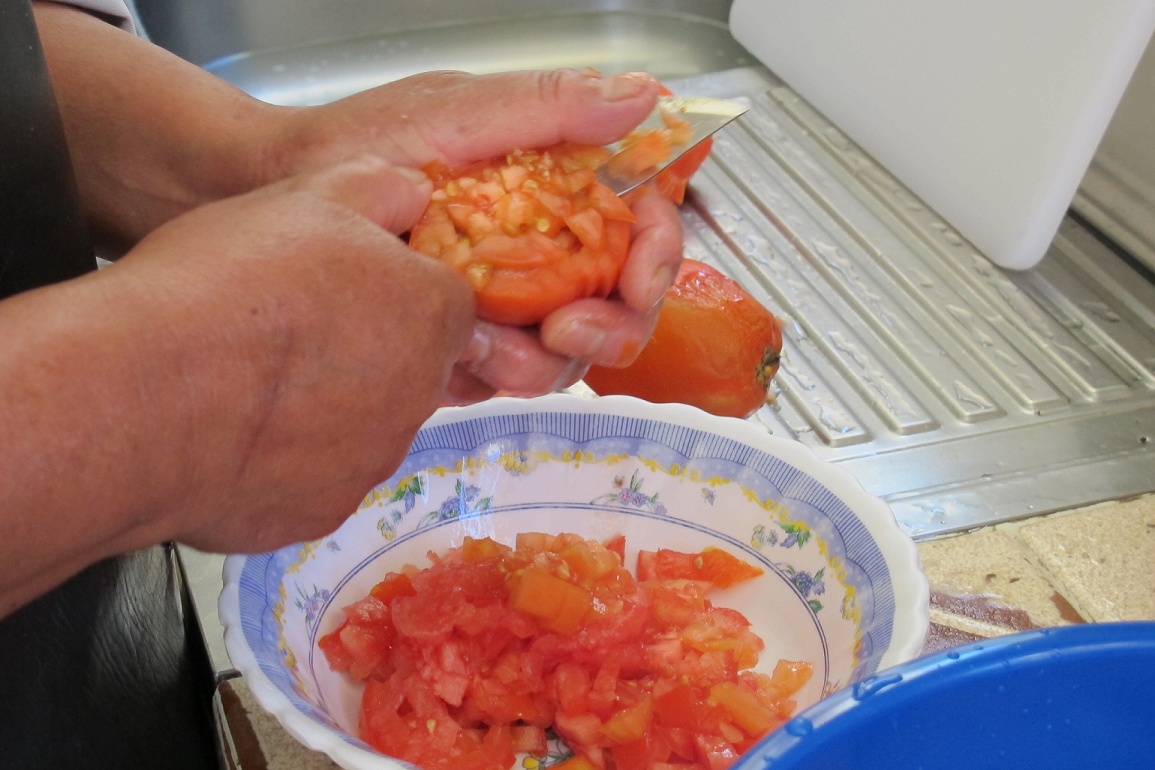
But don’t let their beautiful clothing give you the impression that they aren’t cut out for kitchen work.  Both women can finely dice a tomato in their hand in 10 seconds, haul 30 L pots of soup, single-handedly (did I mention that they are both tiny?) , and skin, trim, and portion a beef liver into razor-thin slices in a flash.

Maria

Maria

 After thirty years of working as a chef, almost twenty of those years teaching professional cooking, I was humbled- and forced to rethink some of the “professional” skills I had been teaching- by these women every day.   How often had I told my students, “never, ever, cut without using a cutting board?”  With no cutting board in sight, Maxima and Maria would fly through a stack of carrots with a small, slightly dull, 10 Boliviano ($1.25) knife, miles faster than I ever could have done using an expensive French knife.  And, talk about the fastest potato peelers you’ve ever seen!

Tomato Concasse- Boliviana

Tomato Concasse- Boliviana

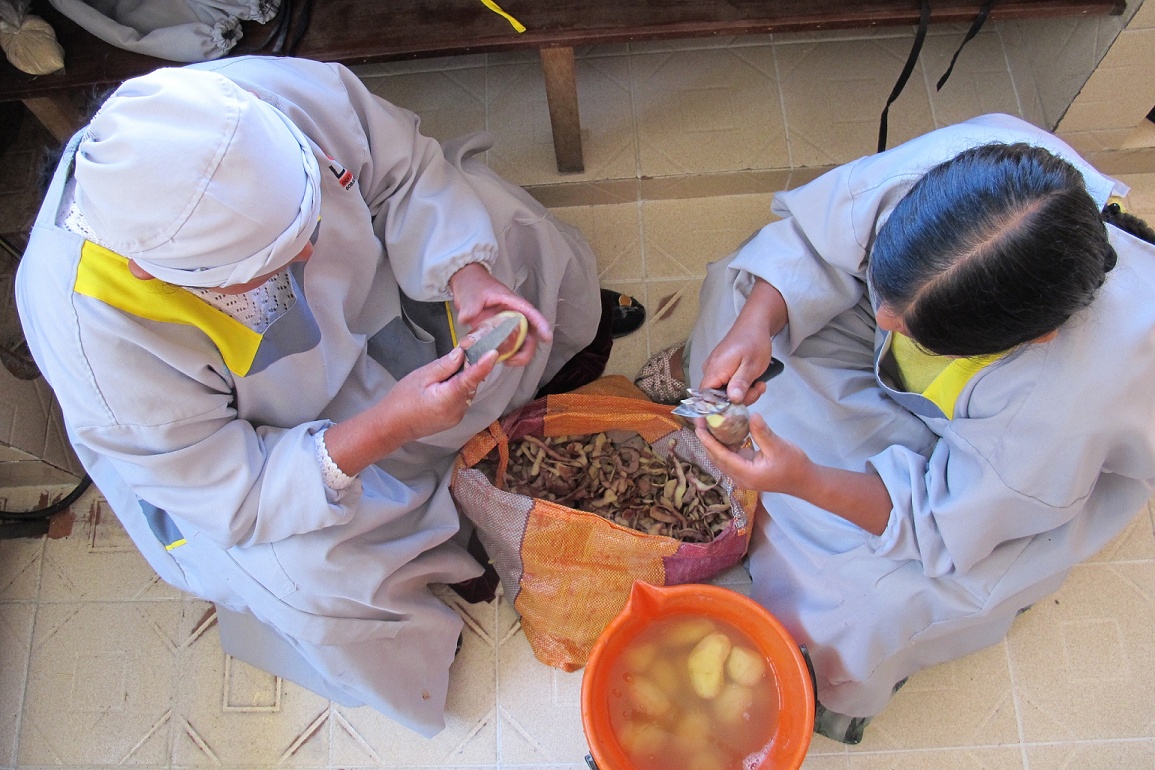
As we sat on little stools around a mound of potatoes needing to be peeled for that day’s segundo (main course), I decided that I was going to display my skill at peeling potatoes with a knife, rather than using a peeler.  I mean, an ego can only take so much!  So after I had peeled about 2 potatoes to their 12, Maxima quietly got up from her stool, dug around in the cupboard and with a respectful, but knowing look, passed me a potato peeler, most-likely left over from the last gringo kitchen volunteer, who, as it turns out, happened to be a chef from London!

Peeling Potatoes at the speed! of light

Peeling Potatoes at the speed! of light

Meals on Wheels- Bolivian Style

Meals on Wheels- Bolivian Style