Latest Posts

Lovin' Spoonful!

The Amazing Salar de Uyuni

“What do you think about going to the Salt Flats when we’re in Bolivia,” I ask?

“I don’t know, there’s a lot to see,” says the CEO of Dugla Tours. 

“ Ya, I know, and it is at a pretty high elevation.  Let’s think about it,” says I.

I can’t really remember how we started calling our travels, Dugla Tours.  Maybe because Doug has practically been earning frequent-reader points from Lonely Planet and Rough Guides, or that he has his finger on the pulse of Trip Advisor.  It probably started after seeing something unbelievable, which seems to happen about every hour during our South American tour.  One of us will turn to the other, after witnessing an amazing sight, tasting a delicious dish, or seeing something really bizarre, raise our glasses and say in unison, “Dugla Tours!” 

Here’s how it goes…

Walking across Isla del Sol on Lake Titicaca with views of ancient Incan terraces down to crystal blue water- “Dugla Tours”

Spying petrified llama foetuses hanging in a shop in the Witch’s Market, La Paz- “Dugla Tours”

Eating trucha a la plancha and papas fritas at a little stall on the beach at Copacabana- “Dugla Tours”

You get the idea.

So, to think that we almost didn’t go to Bolivia’s gem, Salar de Uyuni, at about 10,000 square kilometers, the largest salt flats in the world, with mind-blowing scenery, is a bit of a shocker. And the great people we met?  Well, let me tell you about it.

After we finished our volunteering with Up Close Bolivia at the end of November, we boarded a night bus (“aren’t we too old for overnight buses?” we’re thinking) in La Paz for Uyuni, the gateway town to Salar.  The overnight busses in South America can be quite plush and we were on a very grand one, indeed.  “Meal” service, movies, wide reclining seats, blankets and pillows, “wi fi” (this became a joke for us on our travels because “wi fi” is often offered, but unavailable) and a bathroom!  Believe me, this is a big deal, some don’t have them and if they do, they are often locked.  Turns out we really would need a bathroom on this ride!

When we get underway, our steward serves “dinner”- something slightly unrecognizable which we decline- and a very interesting welcome/information sheet!  Nice to know that they offer “oxygen”- we are travelling to almost 4000 metres, afterall- the opportunity to demand a breathalizer test of the driver, if you think he might have been drinking, oh, and that they don’t recommend drinking any water as the last 120 km of the trip is on a very bumpy road and it will be difficult to get to the bathroom!  I turn to Doug- “Dugla Tours.”

After our 12 hour ride, we arrive in downtown Uyuni, a wild-west town, if I have ever seen one- afterall, Butch Cassidy and the Sundance Kid were shot near here- dry as dust, with tumbleweeds rolling down the middle of dirt roads.  I half expected to see Marshall Dillon and Miss Kitty stroll by!

"Downtown" Uyuni

“Downtown” Uyuni

Dragging our suitcases up and down the dirt roads in the already intense sun trying to find our hotel, I feel a mother of an altitude headache coming on. Finally finding the “Tambo Aymara” I crawl into bed and Doug heads out in search of Sorochi pills, the Andean wonder drug (or, placebo, not that I really cared) made from a whack of caffeine and aspirin.  
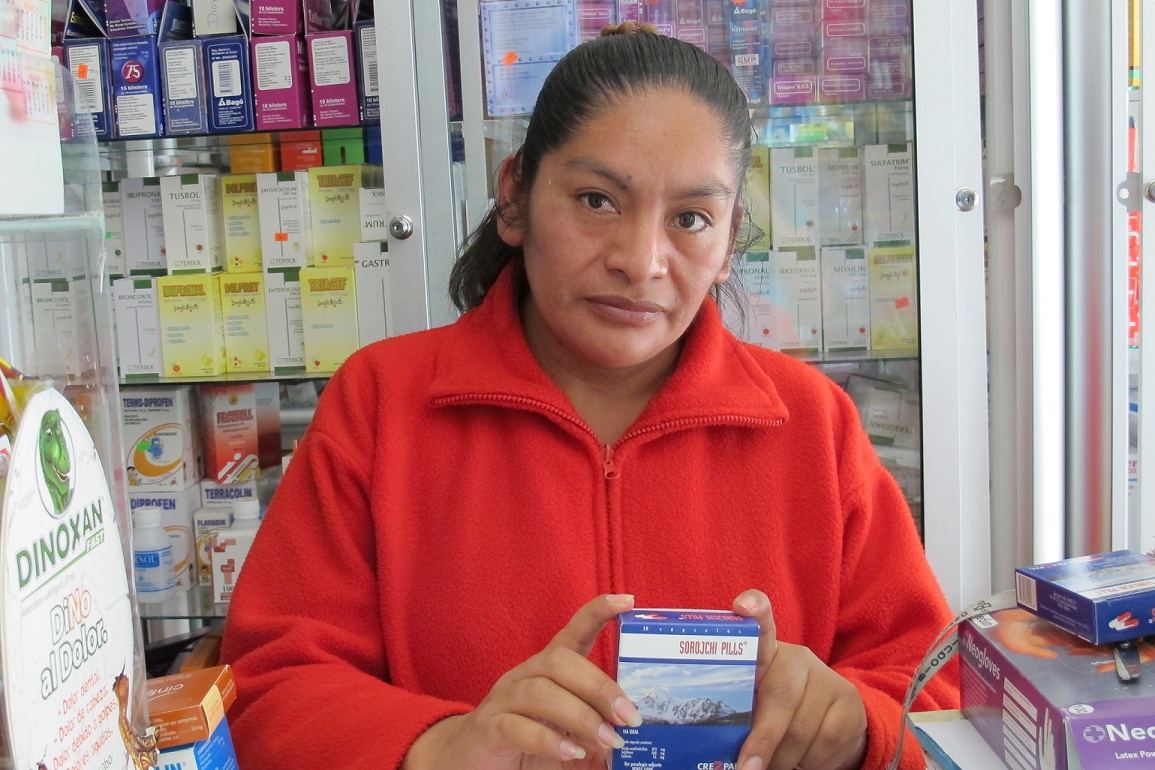
Sorochi Saviour

Sorochi Saviour

After an email consult with my doctor friend Lorraine back in Canada, who has spent a lot of time at elevation, it turns out all I  really need is some ibuprofen and lots of water- “If it doesn’t get better, you have to go down to a lower elevation, that’s an order!”  

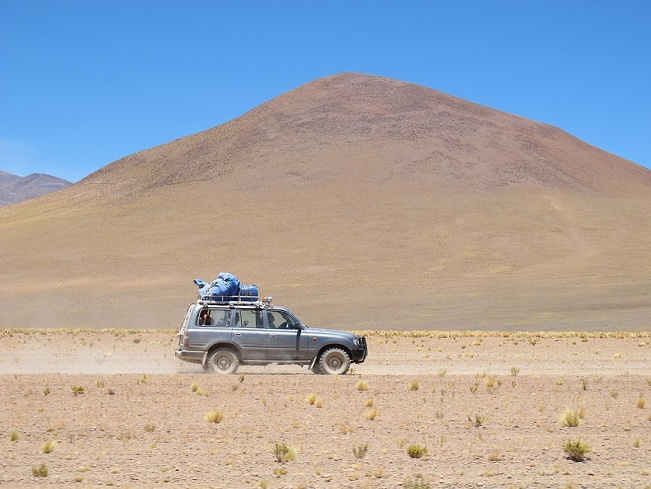
Twelve hours and a fistful of pills later, my head feeling better, I drag myself out of bed, ready to board one of about a hundred jeeps carrying tourists across the flats for two, three or four-day tours.  Our travel companions include one Austrian, three Belgians and one cranky Bolivian- our driver!

First stop on a tour of the Salar is always the train graveyard, just outside of town.  Uyuni was a major trading hub in the late nineteenth and early twentieth centuries, an intersection where trains from Potosi, Chile and Argentina would meet carrying minerals down to the sea.   When the minerals were depleted in the early 1940’s, the British engineered and built trains were left to rust about 3 km out of town.
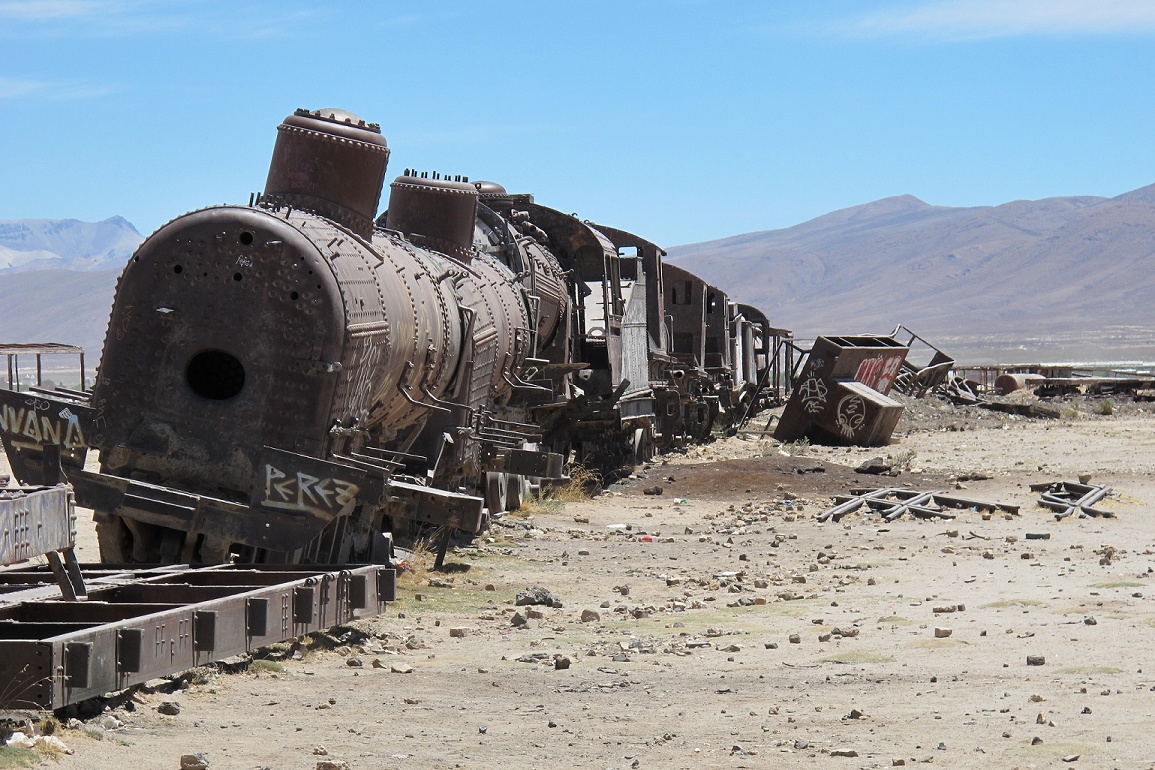
Train Cemetery

Train Cemetery

After touring the ghost trains and trying to get a decent photo without a head or leg poking out between the rail cars, we set off for the sea of salt. It is hard to describe the beauty of the Salar- a vast expanse of white as far as the eye can see under a deep blue sky- and being a Canadian, all this white kind of messes with your head!    You think you are looking out at a frozen lake, but the temperature is about 30C and if you don’t cover up, you’ll burn to a crisp.  Holy smokes, where are my sunglasses?
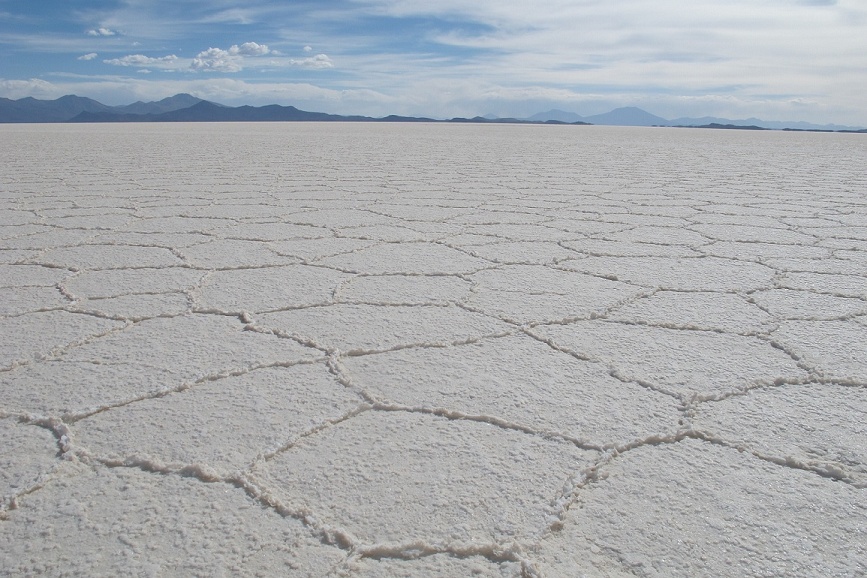
Salar de Uyuni.  I'm sure one of our science-nerd friends can tell us about the pentagonal salt-crust patterns!

Salar de Uyuni. I’m sure one of our science-nerd friends can tell us about the pentagonal salt-crust patterns!


Collecting the salt for processing.

Collecting the salt for processing.

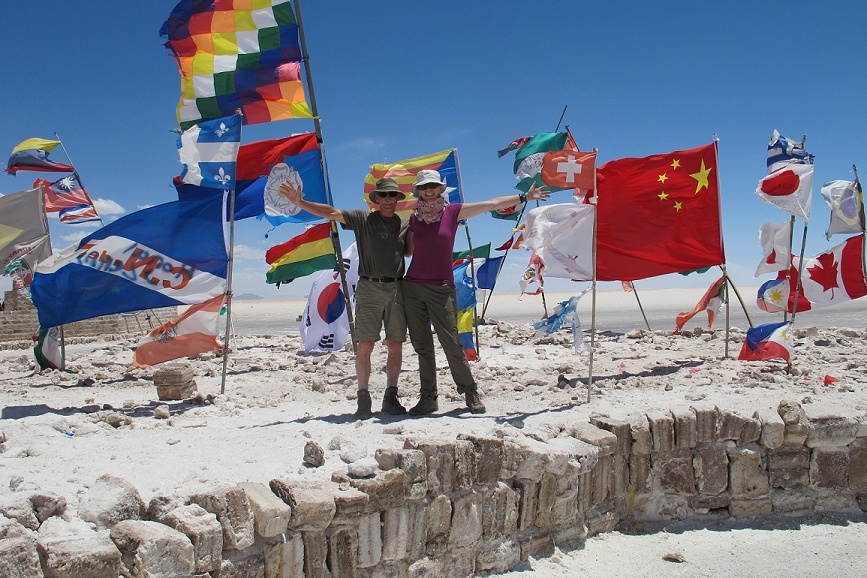
First, we stop at a monument of world flags.  Who knew a gaggle of flags could look so cool?
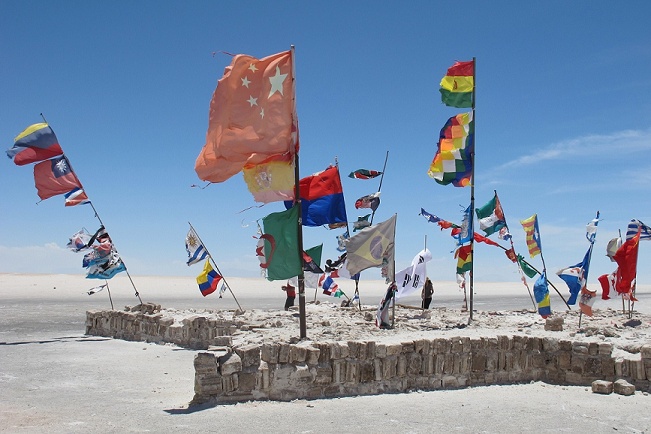
Salt Flags Doug and Al

Next stop, the barren, but beautiful Isla del Pescado, home to 1000 year old giant cacti.  So great to see beautifully-dressed Cholitas as we walked to the top of the island. Have I mentioned I have a bit of a Cholita-obsession?  More on that later in another post!
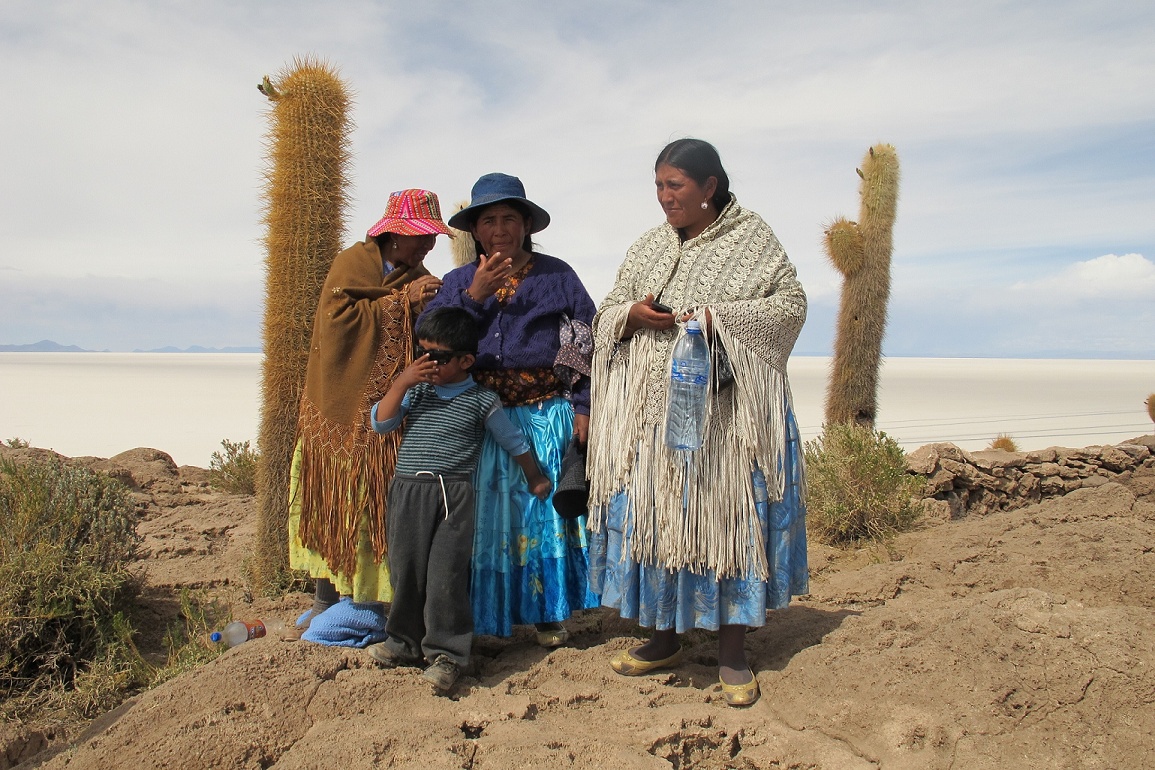
Notoriously shy Cholitas  who graciously posed for a photo!

Notoriously shy Cholitas who graciously allowed me to take a photo!


Giant Cacti- Isla del Pescado

Giant Cacti- Isla del Pescado

On a Salar tour, expect to see unbelievable scenery, but I’m telling you now- don’t go for the food!  That is, unless you happen to be sharing your tour with a Michelen Star chef!  As we were digging into our shore lunch on Fish Island- yes, it really has a shore, since the Salar was once an ocean- of cold, dry, fried alpaca steak, a few veg, cold rice and Coke- it just happens to slip that Willem and his wife Shanna run an exclusive restaurant in Belgium.  So, even if the food was beyond bad, we had three days of delicious conversations about food, swapping stories and recipes, as we roared along in our jeep.
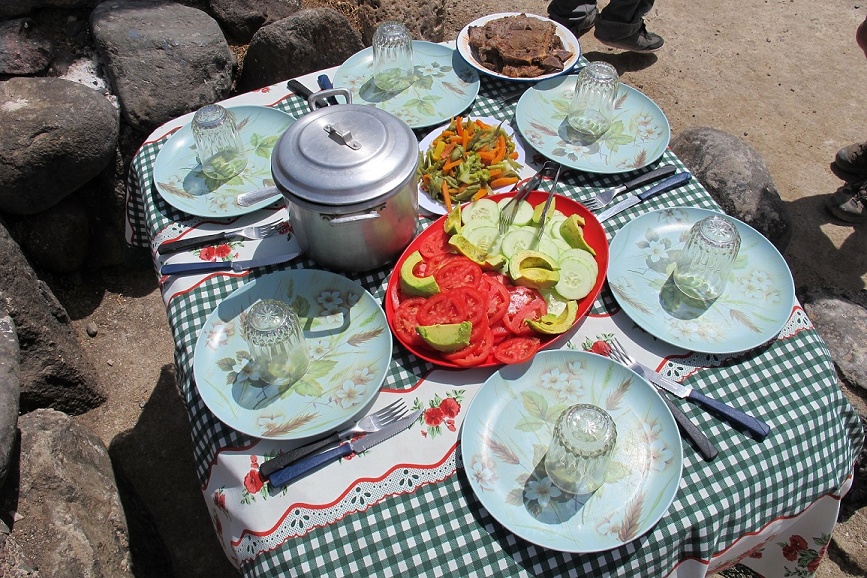
Shore lunch at Fish Island. Top marks for presentation, at least!

Shore lunch at Fish Island. Top marks for presentation, at least!

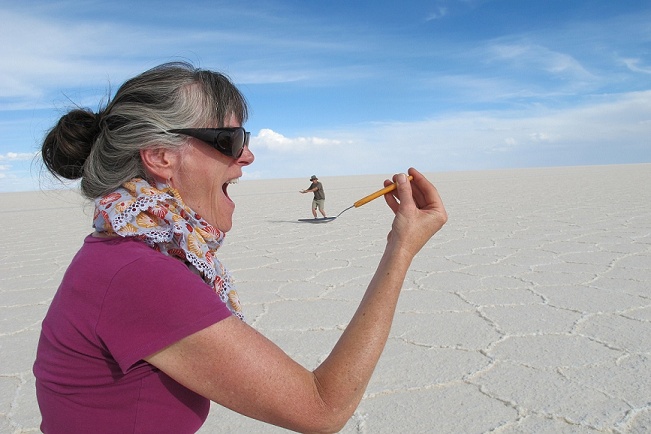
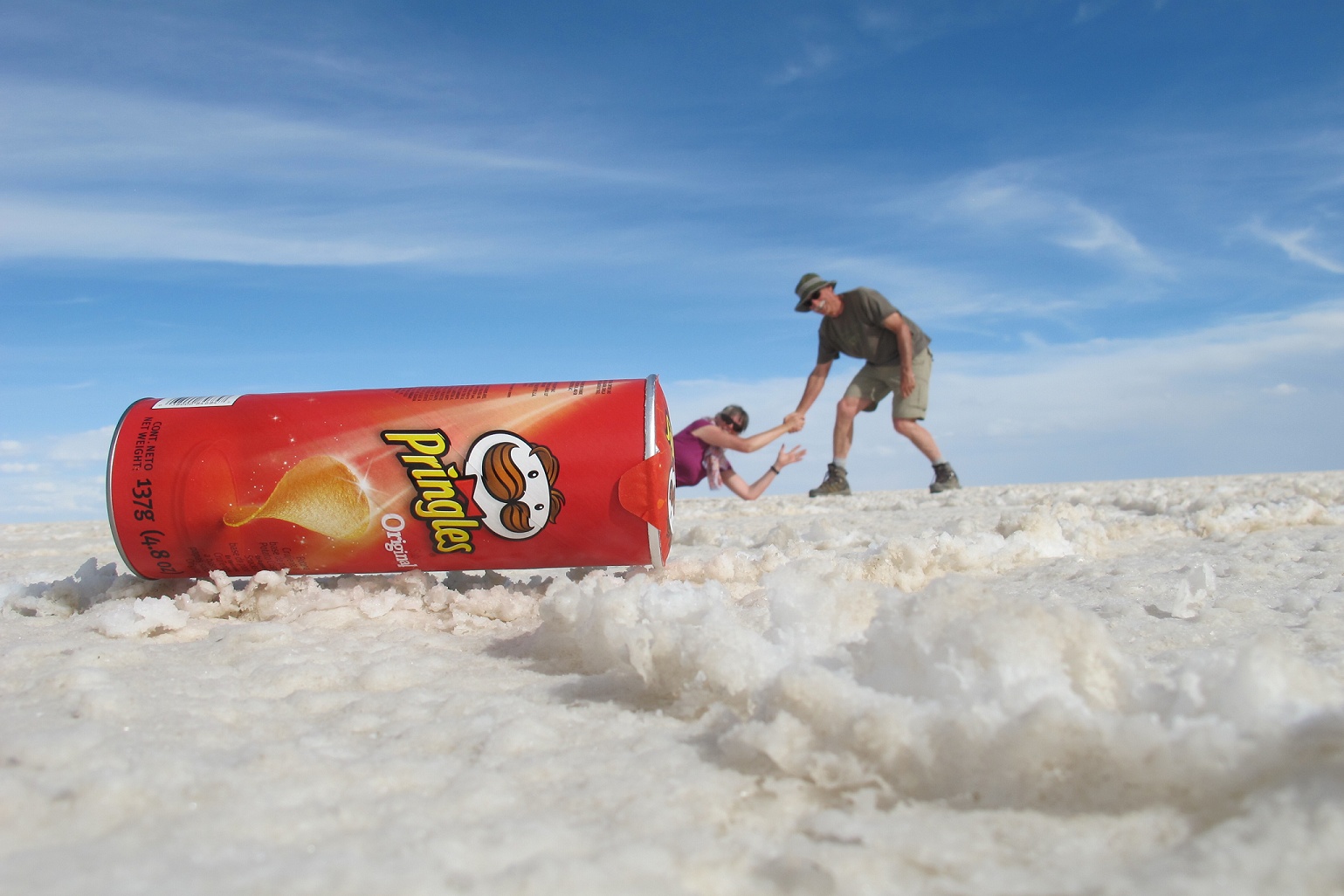
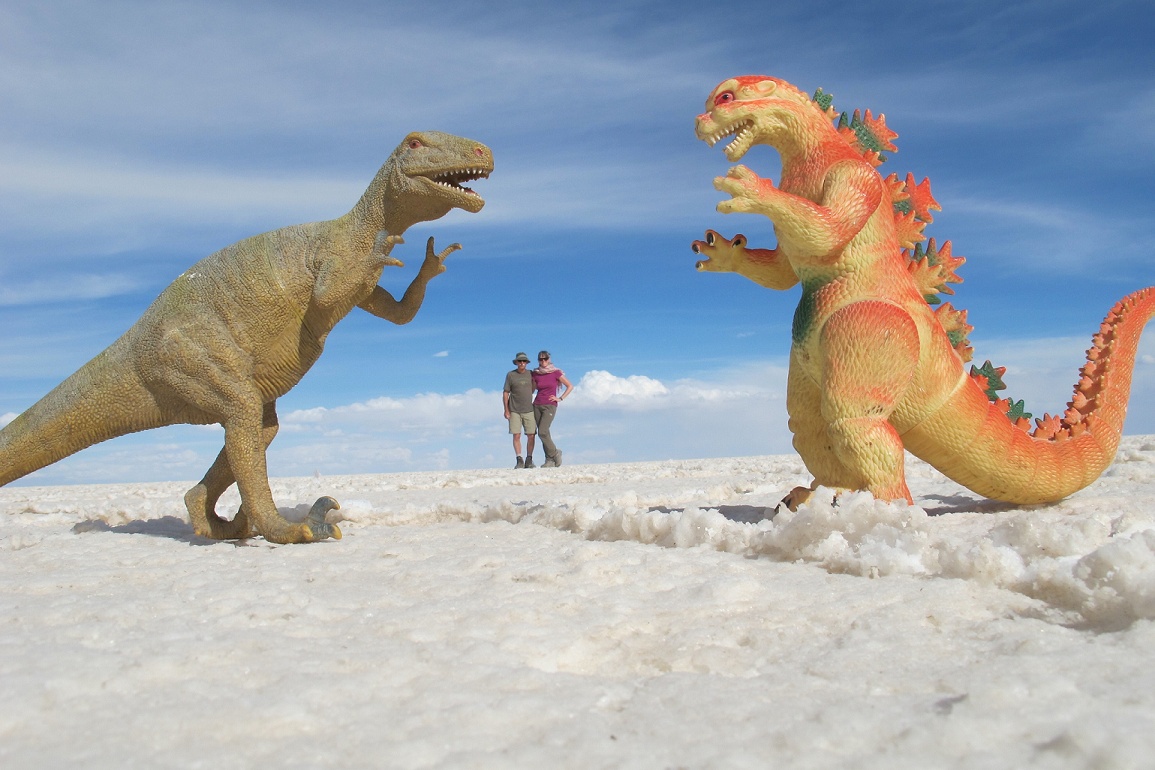
Every trip to the Salar includes taking crazy forced perspective photos, and we didn’t miss out on that…


Loco Gringos!
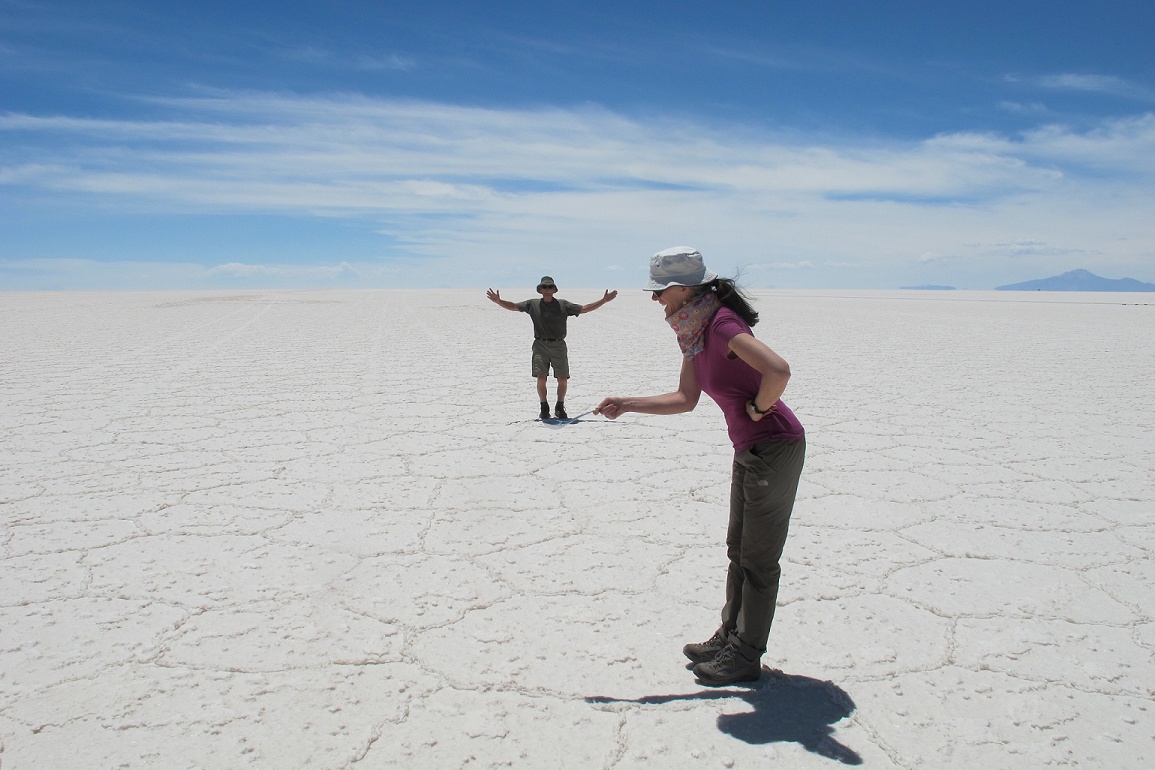
Loco Gringos!


Lovin' Spoonful!

Lovin’ Spoonful!


Man Eater

Man Eater


Come on, let me eat the Pringles!!
Come on, let me eat the Pringles!!


Prehistorio!

Prehistorio!

And, every tour also includes a night at a salt “hotel.”  As we drive along late in the day, I am imagining something grand like the ice hotels in Sweden, when we pull up to what looks like a low-lying shack.   But, you walk through the door into a room lined with salt tables and stools filled with a multi-national crowd all drinking beer, to Doug’s joy.  And, if you are willing to suspend disbelief just a tad, it actually is kind of cool.   Sleeping in a room made of salt bricks, on a salt bed, on a floor of salt.  Who does that?
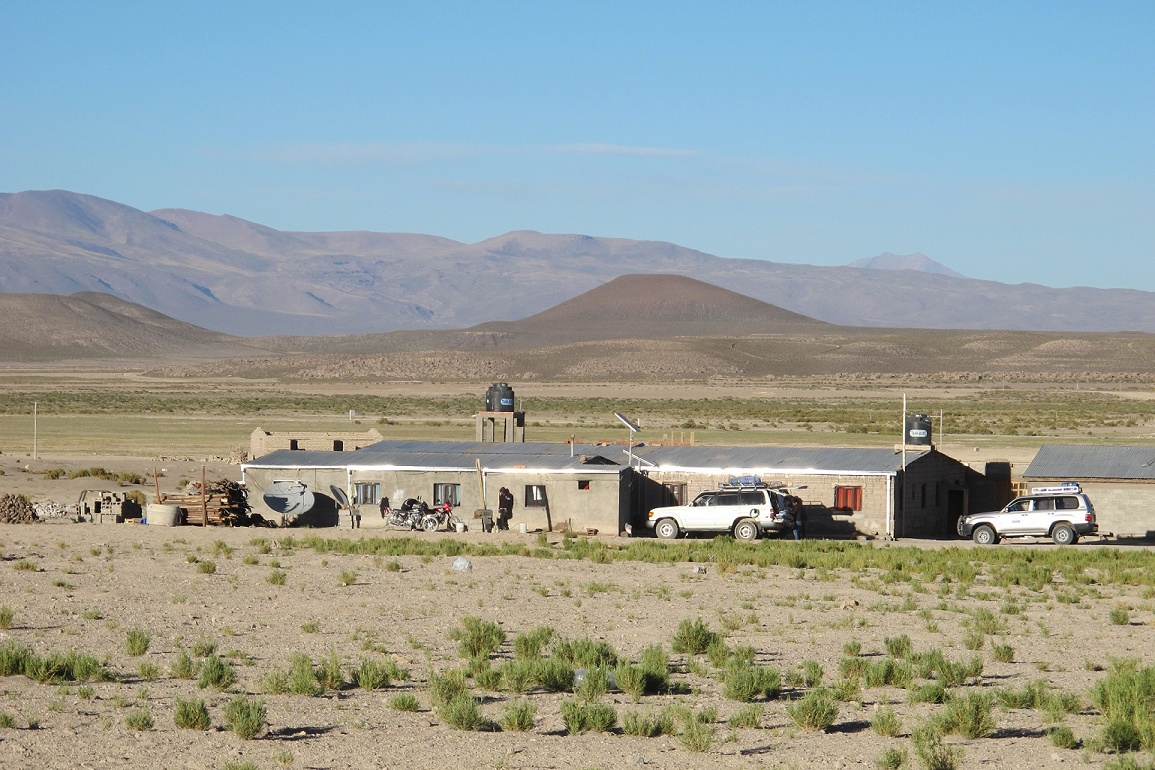
Salt "Hotel."

Salt “Hotel.”


Salt room...er...cell, at the Salt "Hotel."

Salt cell…er…room, at the Salt “Hotel.”
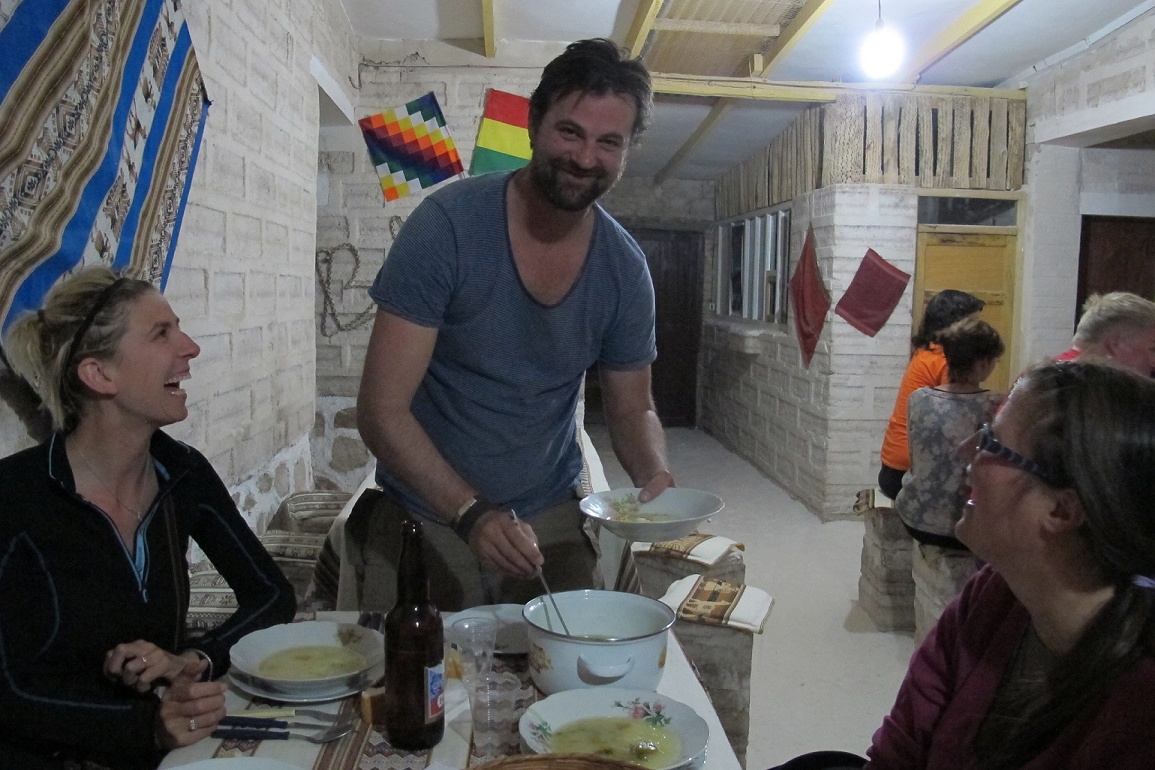
A most-mediocre Caldo de Gallina at the Salt "Hotel" served by Chef Willem!

A most-mediocre Caldo de Gallina at the Salt “Hotel” served by Chef Willem!
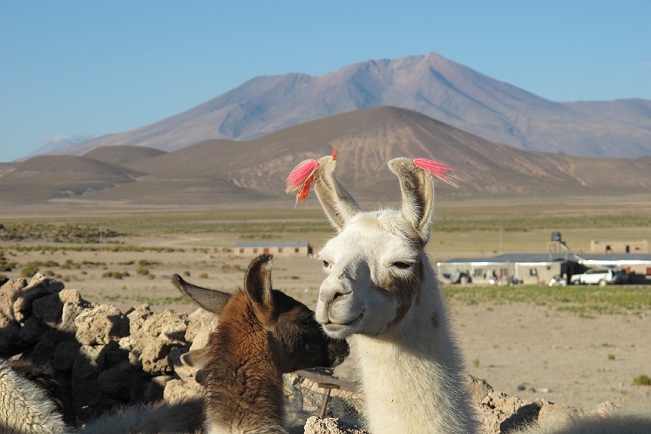
 

Early morning visit to the llama corral at the Salt "Hotel."

Early morning visit to the llama corral at the Salt “Hotel.”

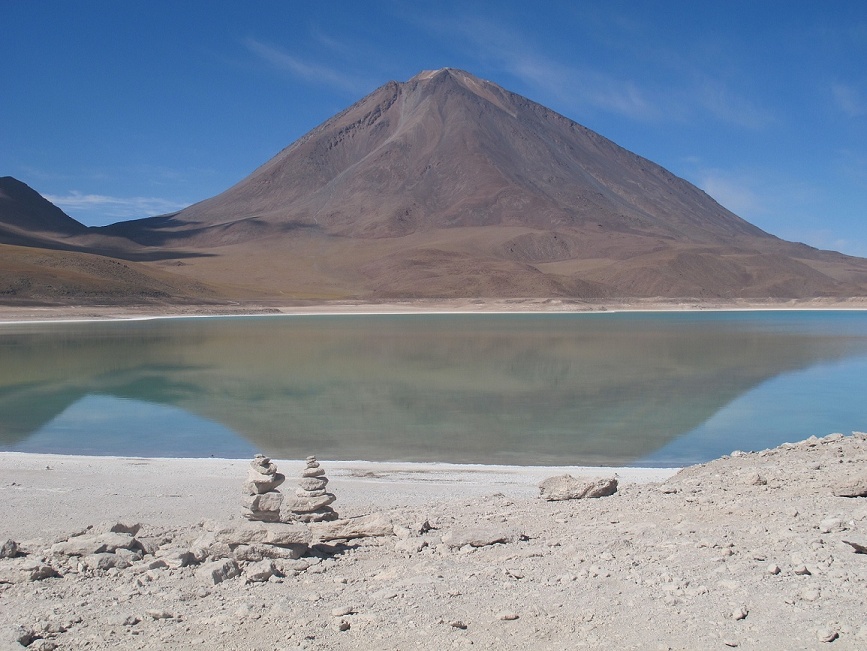
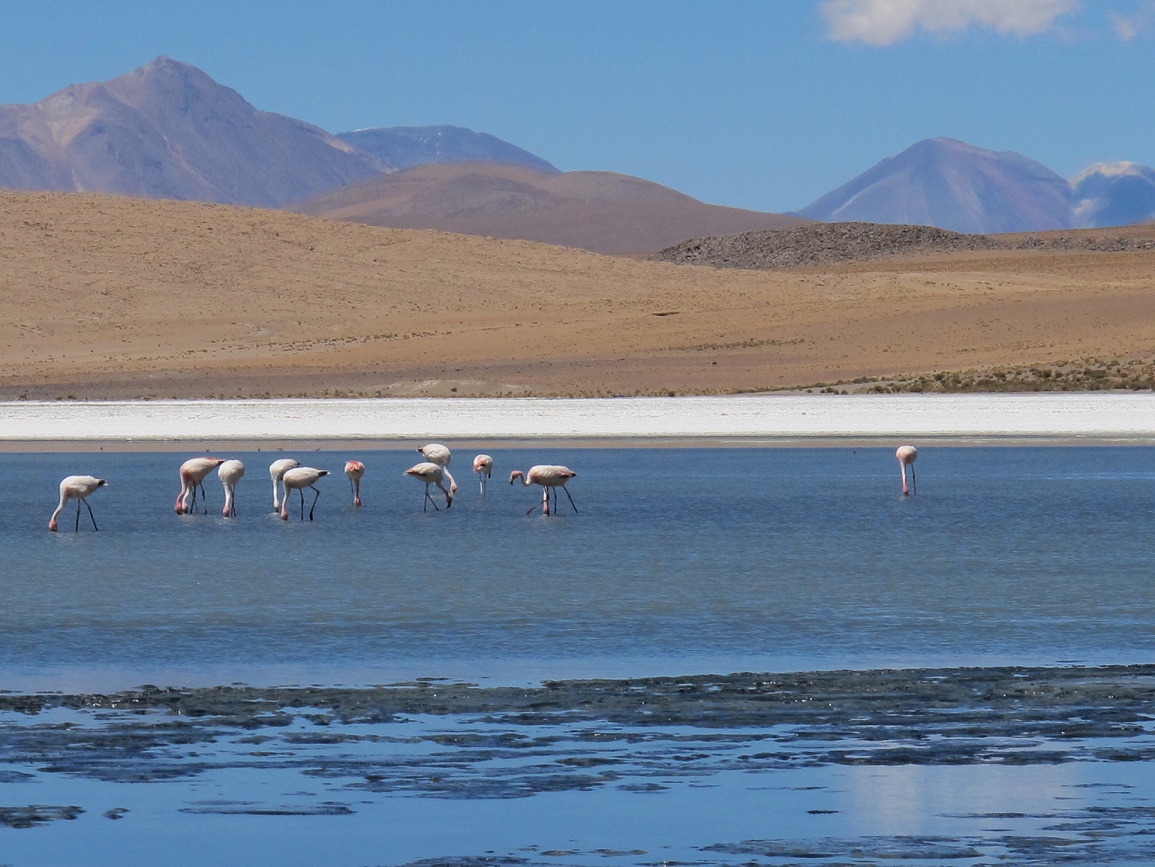
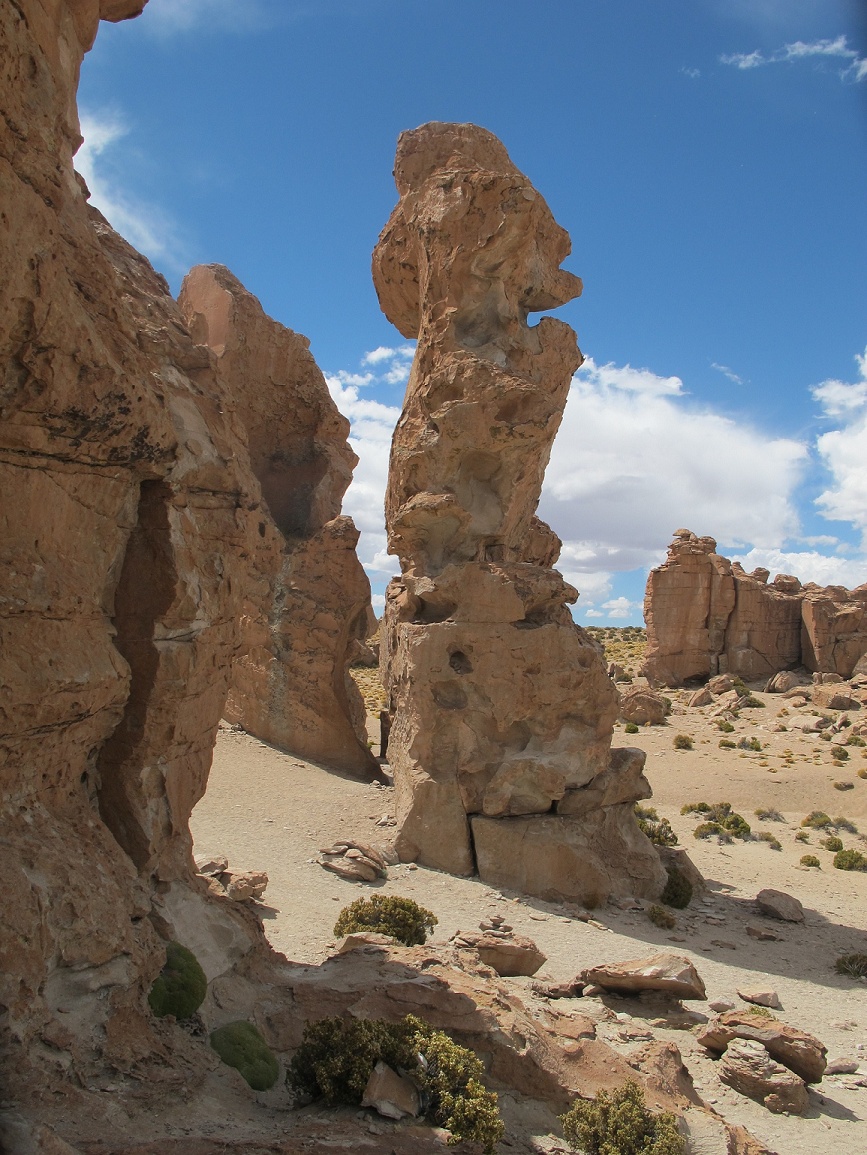
What I didn’t really realize about our trip to the Salar was that it also included two days of travel through some of the most amazing and unusual scenery ever.  Mountains of red, purple and blue, lakes of green, yellow and orange, flamingos in every shade of pink, bubbling geysers and hot pools,  and a moss-like plant that seemed to pour over massive rock formations like liquid green velvet. 
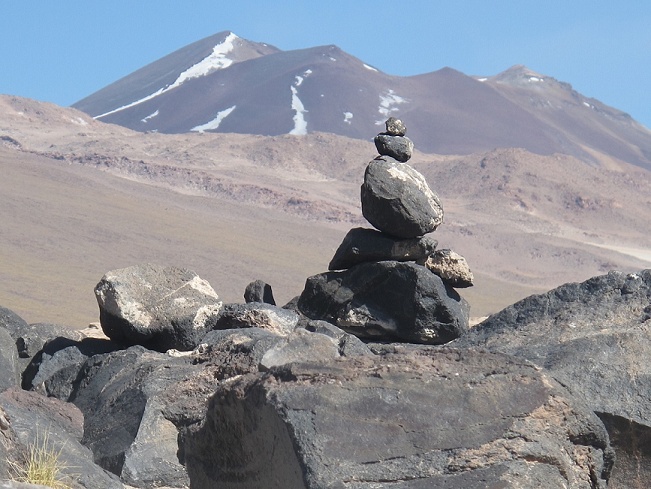
 

Como se dice "Inukshuk?"

Como se dice “Inukshuk?”

Laguna Verde


Flamingos on Laguna Colorado

Flamingos on Laguna Colorado

Hoodoos, Bolivia-style!

Hoodoos, Bolivia-style!

Psychedelic Liquid Moss

Psychedelic Liquid Moss

Geezer...I mean, geyser!

Geezer…oops, I mean, geyser!

One of the highlights of the trip, aside from our great travel companions and the scenery, was dropping off Eva, our Austrian travel-mate who was carrying on south, at the Chilean border.  We were sad for her to go, but what a kick seeing the border shack!  You want to talk wild frontier?  There appeared to be only a ditch marking the border, with a couple of tourist vans on either side. I was tempted to jump the ditch, just to say I had been in Chile!
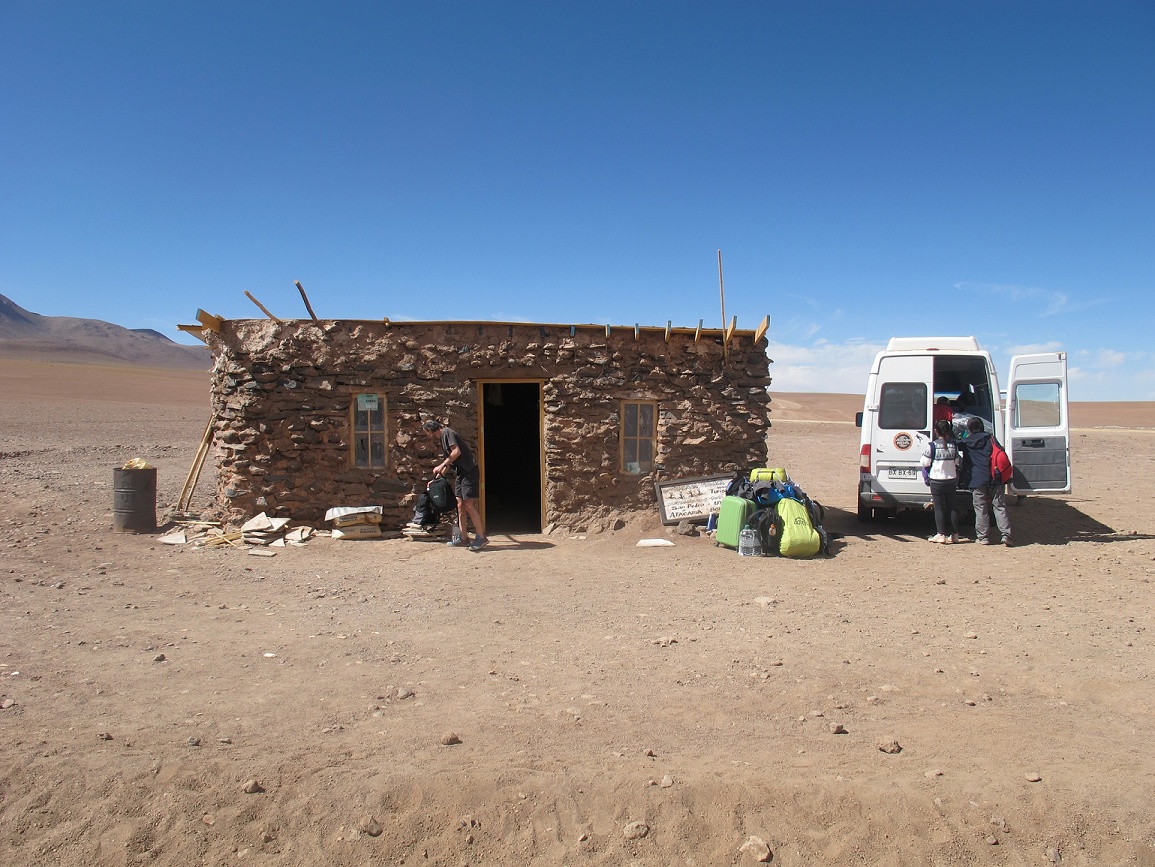
Donde esta la frontera, por favor?

Donde esta la frontera, por favor?

And, just to remind us that you don’t go on a Salar tour for the food, we stopped for our last lunch of the trip.  To be honest, the boiled wieners weren’t bad!
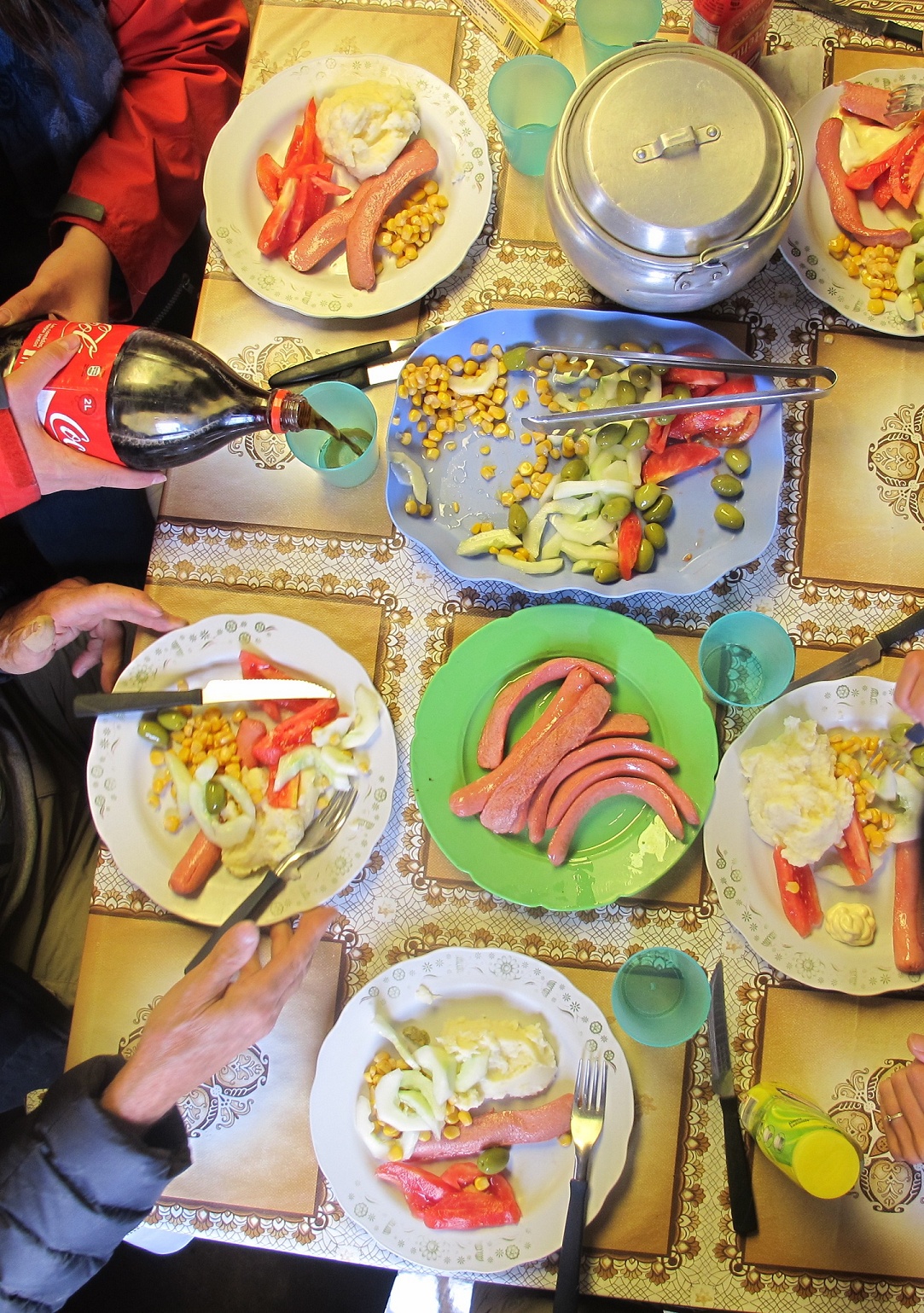
Boiled weiners?  Don't mind if I do!

Boiled weiners? Don’t mind if I do!

Roaring back to Uyuni...

Roaring back to Uyuni…

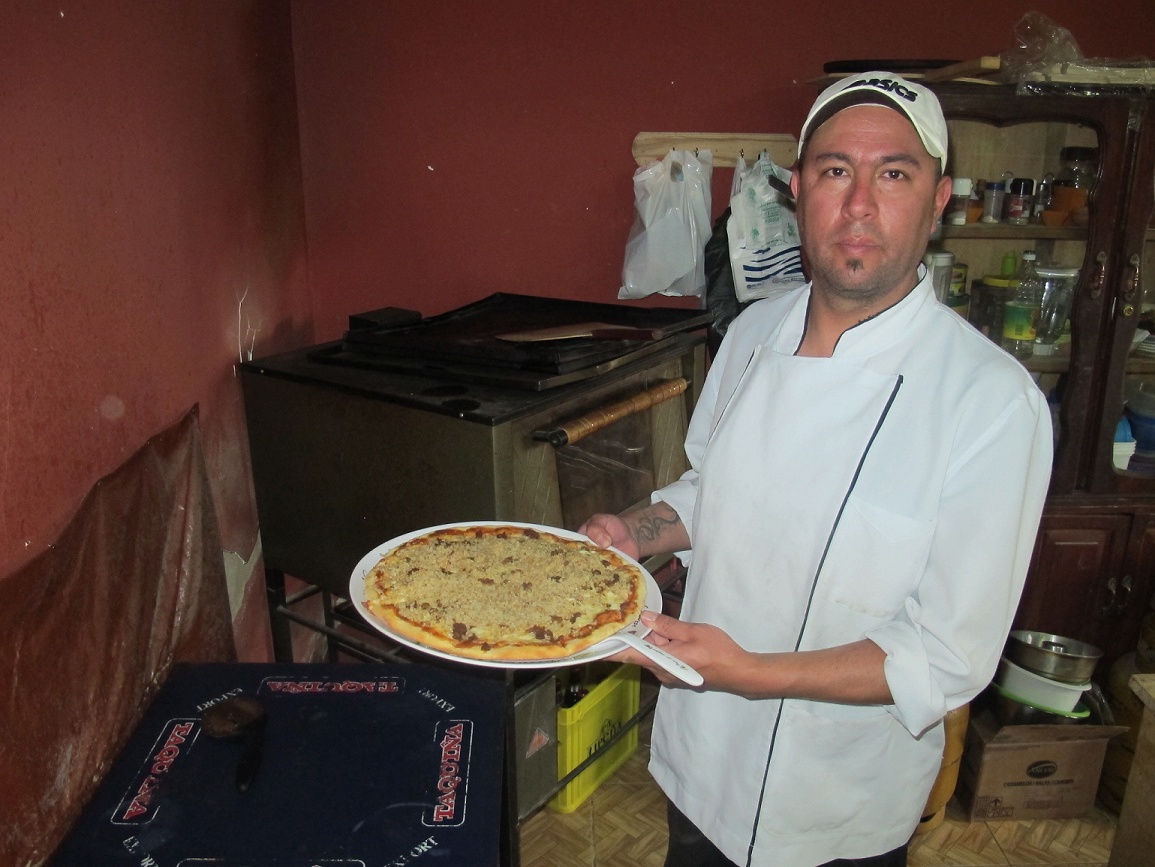
Arriving back in Uyuni after three days, thousands of kilometres and a dearth of decent food, we were, of course, dying for something good to eat.  So, after saying good-bye to Aurelie, our other Belgian travel companion, who was catching a bus to Potosi, Doug led us to- get this- the BEST wood-fired, quinoa-crusted, alpaca-topped, spicy pizza, this side of the equator!  In fact, the owner/chef had won 100,000 Bolivianos to put towards community projects in a competition the previous year with his mouth-wateringly good creation.  The perfect end to a great trip… “Dugla Tours!”
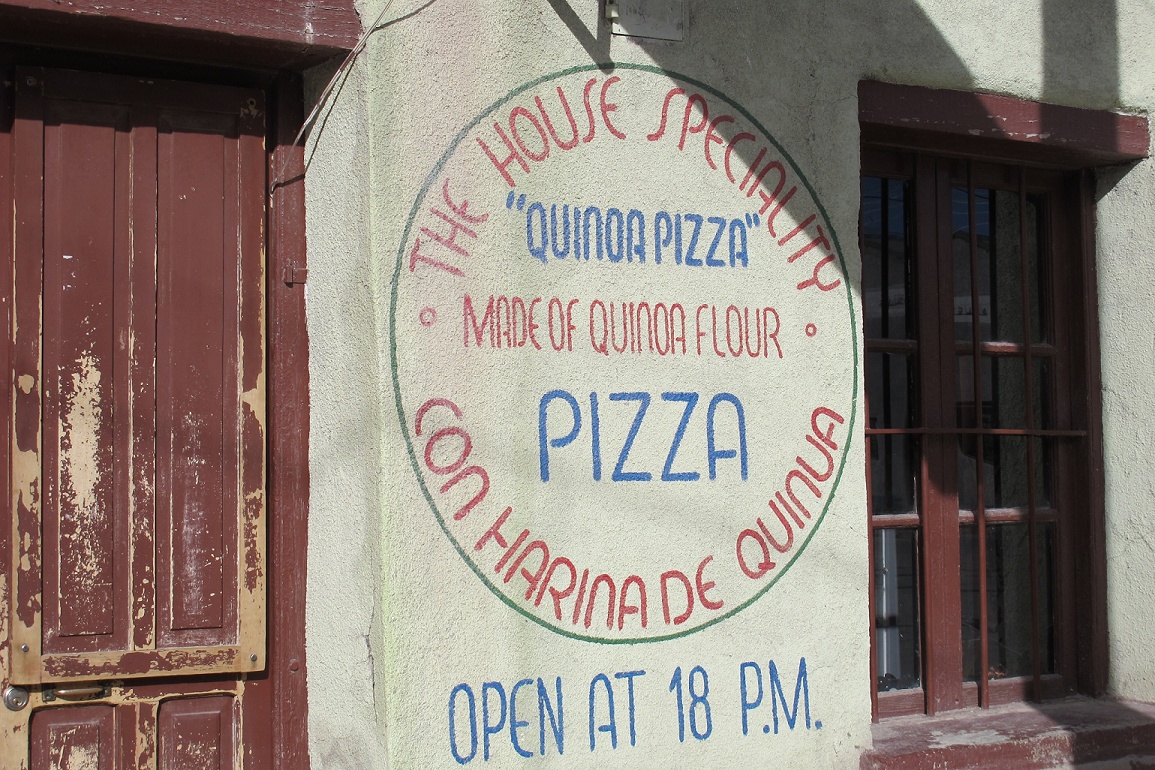
 

Prize-winning, quinoa-crusted, alpaca-topped, super yummy pizza!  Gracias!

Prize-winning, quinoa-crusted, alpaca-topped, super yummy pizza! Gracias Fernando!
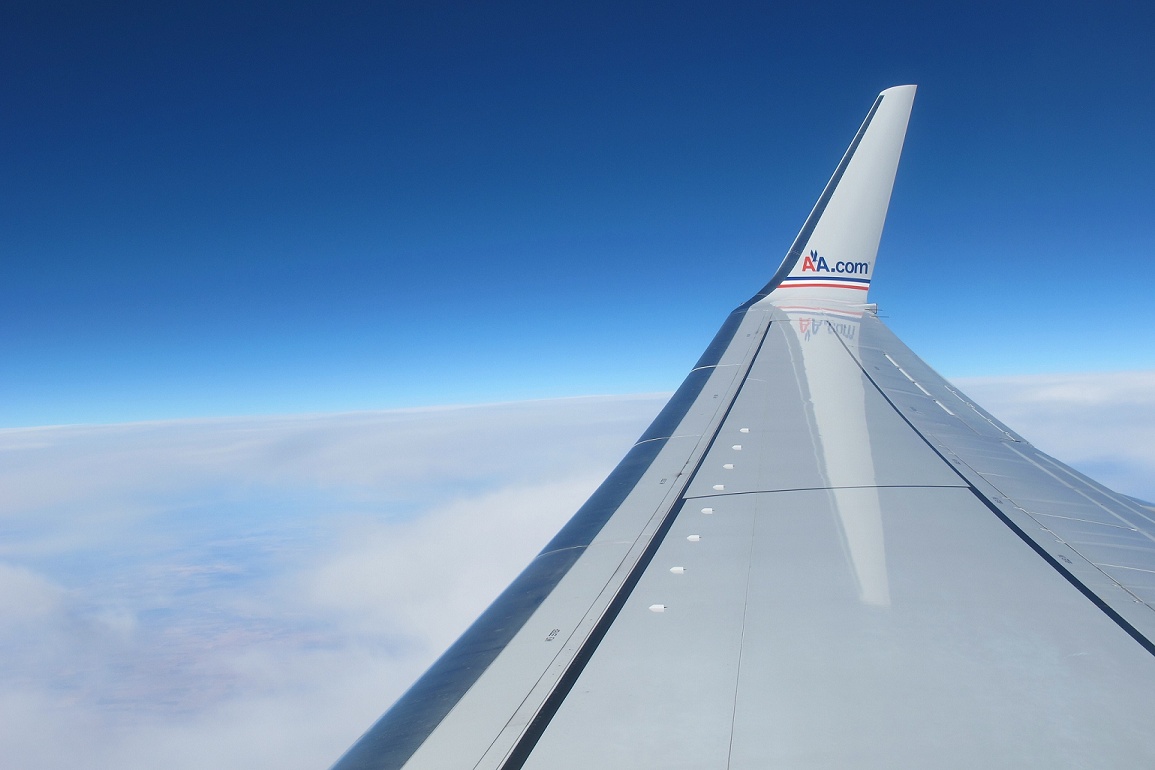


Somewhere over Bolivia

Giving Back: dos voluntarios Canadiense van a Sud America

Last year, when Doug and I decided to travel to South America during my leave from teaching, volunteering was our prime motivation, followed closely by exploring mountains (for Doug) and discovering great food (for me, of course), with some amazing travel thrown in.  We also thought that we would focus on Ecuador, since we had never been there and had heard great things.

Doug, being the researcher that he is, began systematically wading through the seemingly endless number of NGOs doing work in South America.  Honestly, just Google volunteer or NGO South America and you’ll see what I mean.  So, every day when I came home from work, Doug would have a few more sites to add to his “short list,” which was looking like a “super long list” if you ask me!  As much as I think Doug’s organizational systems are great, I have to admit that I am more of the jump around from site to site kind of person, hoping that the perfect one will pop out. But, I promised to honour the systematic approach. 

So, when Doug’s final list was completed, it was my job to go through and choose my short list and then we would cross-reference.  I was secretly hoping that he was going to whittle his list down to the perfect two or three and save me the job! I spent a few days going through them all- believe me, there were lots- and afterwards we had a “planning meeting” to discuss our choices.  Many were cut, for a variety of reasons- too remote, no need for our skills, a faith-based mandate that didn’t fit for us, or ones that featured “voluntourism” opportunities for a gap year, appealing to the early 20s crowd.  Also, some organizations are for-profit operations charging a fortune and we really believe in non-profit volunteering.  On the other hand, a few came out as clear winners.  Interestingly, none was in Ecuador!

So, off went our emails and the wait began.

“Do you think they’ll…need our skills?…think we are too old?…like the sound of us?…even answer our emails?” 

Almost immediately, we heard back from Emma Donlan at Up Close Bolivia, just outside La Paz, with a very positive response.

bolivia_volunteer_up_close_bolivia_logo

Shortly after, another came in from Diana Morris at Andean Alliance an organization just outside of Huaraz, Peru.

AA LogoAnd another from a group in Huancayo, Peru.  After a few weeks of emailing questions back and forth, sending references, and a few telephone conversations, all organizations welcomed us.  Deciding that three different placements might be too much, we had to cut one out.  Sadly, Hauncayo will have to wait for an otra vez!

Wow, we thought, we’re really doing this!

What followed were more weeks of planning and figuring out dates.  Our plan was to start in La Paz at the end of October and work our way up to Peru. 

And so, after trying to figure out what to pack for three months…

As Betty, Doug's mother would have said, "a Girl's got to have her things."  Notice that Doug has a few odd pieces ready on the far left!
As Betty, Doug’s mother, would have said, “a girl’s got to have her things.” Notice that Doug has a few odd pieces ready on the far left!

… we boarded our American Airlines flight in Calgary on October 29th and set off…  

Somewhere over Bolivia

 … just a couple of slightly weathered Canadians embarking on what would be, for us, a “gap year” of sorts!


Up Close Bolivia: Reciprodad at its Best

Something that I suspect helps to make a blog good- the thing that has people on the edge of their seats waiting to read a new post- aside from the highly entertaining script, is that the stories are posted fairly regularly and in a fairly organized manner. I mean, if you are following someone’s blog, don’t you kind of want the stories coming at least once a week?  I am sure there must be some kind of protocol in the blogging world on this, but I am resisting the urge to Google it!  To be honest, even calling myself a “blogger” seems a little pretentious, having been at it such a short time.  So, I am going to give a justification, of sorts, for not being a better blogger and posting things as they happen- we are having such a blast and so many great things happen every day that I’ve fallen behind.  So, without further ado, let’s jump back a month and talk about the amazing experiences we had while volunteering with Up Close Bolivia…

 Once we figured out where we wanted to go, who we wanted to help, and, in turn, which organizations wanted us, we boarded our American Airlines flight from Calgary to Bolivia.  Twenty three hours, and more than one bad meal later, Doug and I landed in La Paz, about to embark on our first volunteer placement of the trip.

After a couple of days of acclimatization in La Paz, which included one massive altitude headache, followed by a few doses of Diamox and some ibuprofen, we made our way to our new home with Up Close Bolivia.

 bolivia_volunteer_up_close_bolivia_logo

www.upclosebolivia.org

“Up Close” for short, is a family-run, community-based, non-profit organization located just south of La Paz.  Founded by British-born Emma Donlan and Boliviano, Rolando Mendoza, both former volunteers with years of community and international service under their belts, Up Close Bolivia’s mission is steeped in the philosophy of “reciprocidad” a belief central to Andean culture.  According to their website, which you really need to check out, reciprocidad is all about “giving back and contributing in a way which enriches both the person who is giving and the person who is receiving equally.”

Through Up Close, Emma and Rolando certainly do that.  Reciprocity is demonstrated in numerous ways through projects which include, supporting a pre-school, running after school programs in two locations, organizing a weekly football club, offering English classes to the community, providing tour guides and support at the Mallasa Zoo, various environmental projects, supporting a Mother’s Club and beautifying the community with murals.  I’m sure I have missed other great projects, because it seemed to us that Emma and Rolando always had something on the go and were exploring new ways to give back to and to support their community.  All this while holding full-time jobs, sitting on community committees, hosting great gatherings at their home and raising two great kids, David and Bell! 

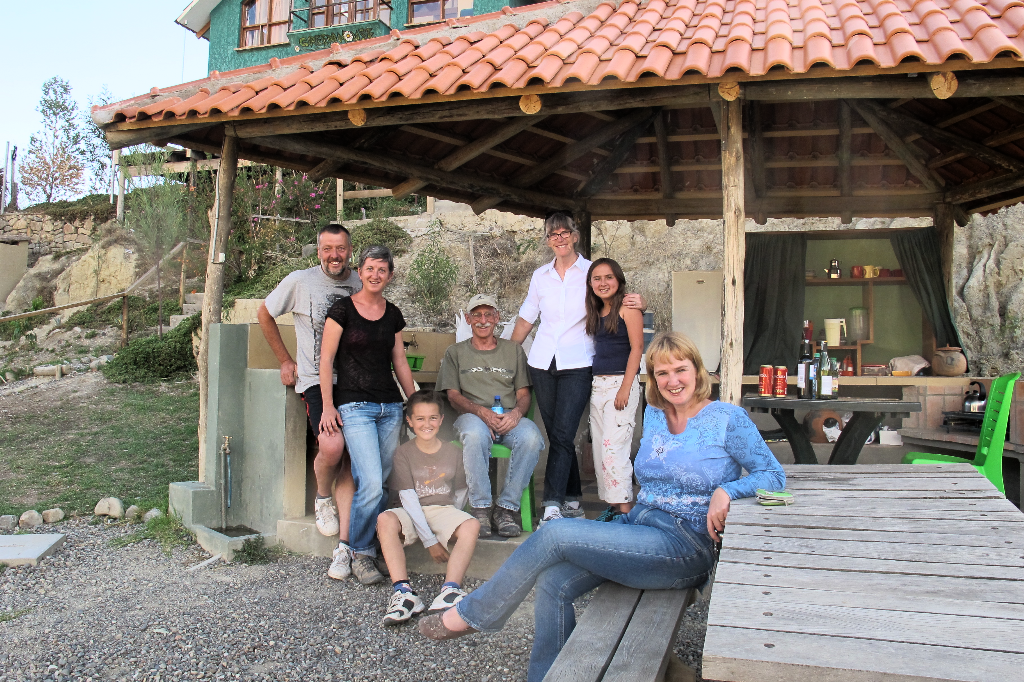
The Mendoza-Donlan Clan, sin Rolaaando, who is taking the picture: Emma, David and Bell and our new friends, Jeremy and Paula dropping be for Happy Hour in our dining room!

The Mendoza-Donlan Clan, sin Rolando, who is taking the picture: Emma, David and Bell and our new friends, Jeremy and Paula dropping be for Happy Hour in our dining room!

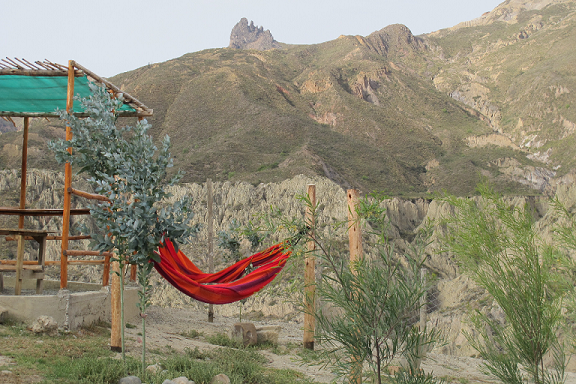
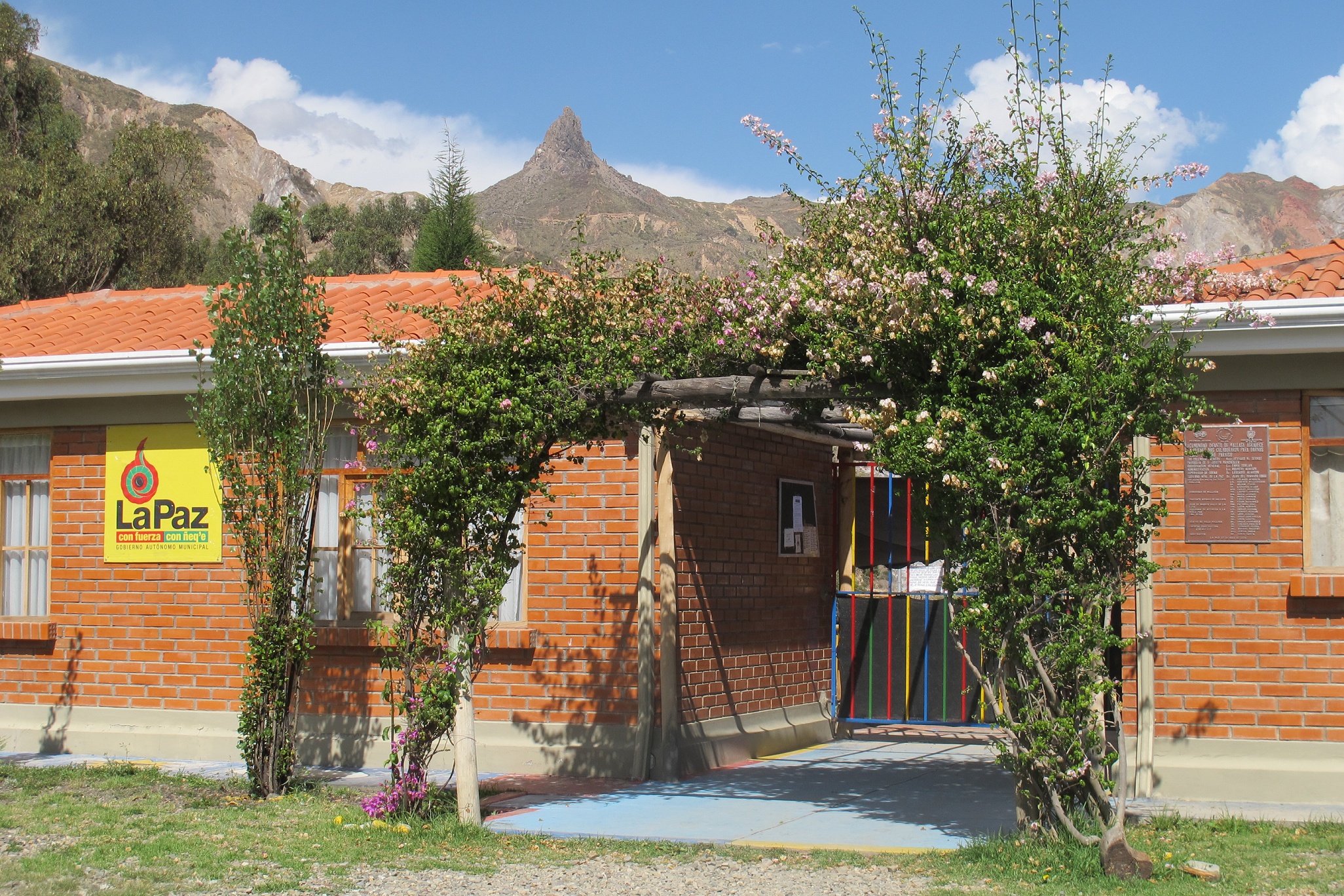
While part of Up Close, Doug and I lived in the little village of Jupapina, within view of La Paz, where the organization is based, and spent our days at the Valley of the Moon- Valle de la Luna- Children’s Centre, about 3 km up the road in Mallasa.   On a beautiful piece of land, in the shadow of a magnificent peak known as the “Devil’s Molar” and above the “Valley of the Flowers,” sits the Mendoza-Donlan home, a central hub where the family welcomed us regularly for dinners or special events, a quick chat over a cup of real English tea or a Bolivian cerveza, a chance to share one of David’s amazing bowls of popcorn, or to be regaled with one of Bell’s wonderful stories.   Next door are three small houses that can accommodate up to 12 volunteers and below this, a newly-developed and beautifully landscaped camp-site with an open kitchen and an adorable A-Frame cottage- our home. 

The Devil's Molar- Muela del Diablo

The Devil’s Molar- Muela del Diablo


The Up Close "village" in Jupapina, Bolivia

The Up Close “village” in Jupapina, Bolivia

While we were with Up Close, eight other volunteers, all from Britain, lived on-site.  With an average age of 22, we were easily the oldest volunteers by about 39 years! I am sure they must have wondered how on earth they ended up sharing their gap year with people the same age as their parents, but luckily, Doug and I are young at heart (read- fairly immature) and so I don’t think the age difference was glaringly apparent.  Robin, Hussein, Josh, Harriet and Katrina were all part of the British International Service Program and managed, in partnership with Up Close, by Naomi, a talented young British woman with a beautiful singing voice and perfect Spanish.  Two other volunteers who were there independently, like us, Alice and Sarah, also both from the UK, rounded out the team.  

Every morning, Doug made the coffee over our little gas burner and we enjoyed our breakfast al fresco with a million dollar view.  Most evenings, we cooked in an outdoor kitchen, but often we weazled our way into an invitation to Paula and Jeremy’s digs up above.  Paula and Jeremy, British journalists on a two year (so far) trip through the Americas, joined Up Close in a slightly different capacity as part of the “Work Away” program.  They spend their days working the land and on marketing/promoting the soon-to-be campsite- Camping Colibri.  Paula and Jeremy became great friends and even taught Doug a new language- British!  He is now quite fluent and can easily incorporate terms like “vest” and “knickers’ into every day conversation.  Read about their adventures on a great blog called SeventeenbySix at http://seventeenbysix.wordpress.com/category/bolivia/

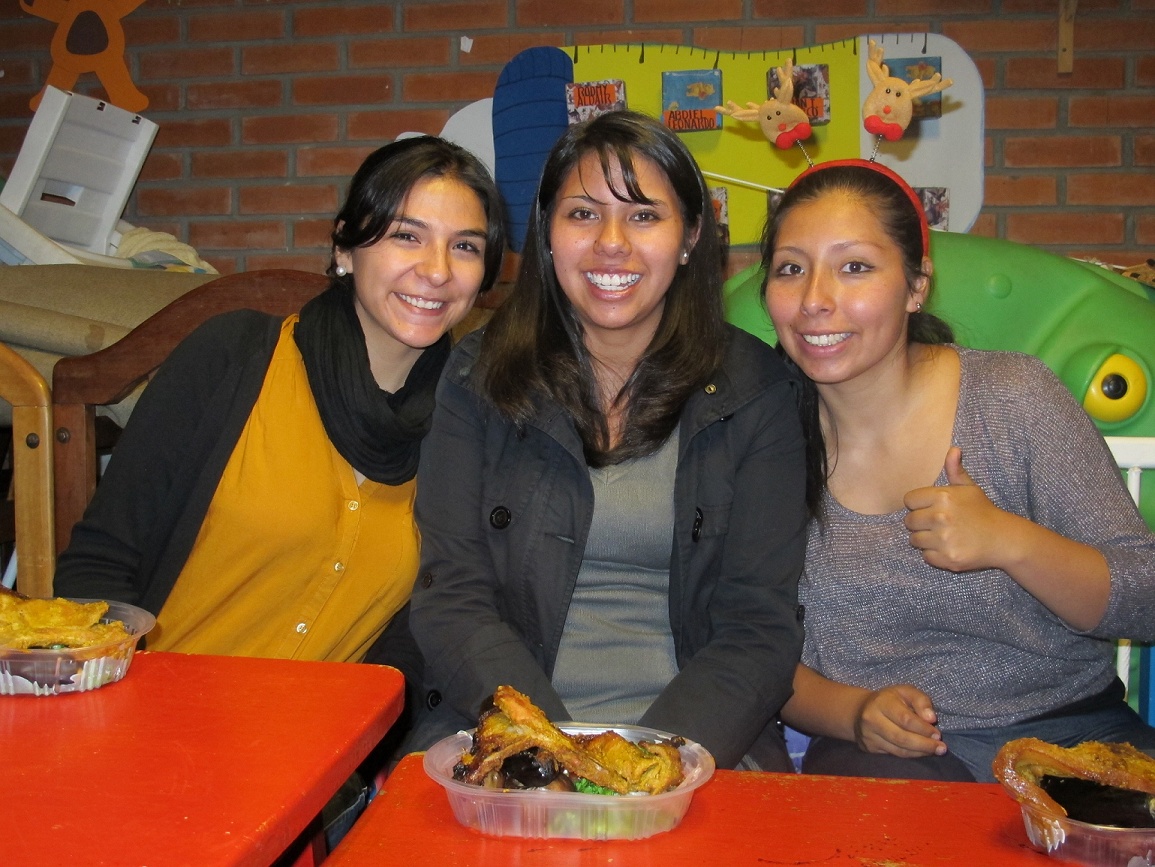
Up Close also has three terrific Bolivian staff- Anahi, Anita and Raquel- all beautiful, enthusiastic, caring and fluently-bilingual young women, who coordinate the volunteers and the projects. They did everything they could to make our stay in Bolivia terrific, whether it was interpreting for us, helping us find the best place to buy our favourite ingredients, giving us rides into La Paz, or photo-copying recipes for the Mother’s Club at the last minute each week.  In fact, everyone treated us like gold. 

Anahi, Raquel and Anita

Anahi, Raquel and Anita

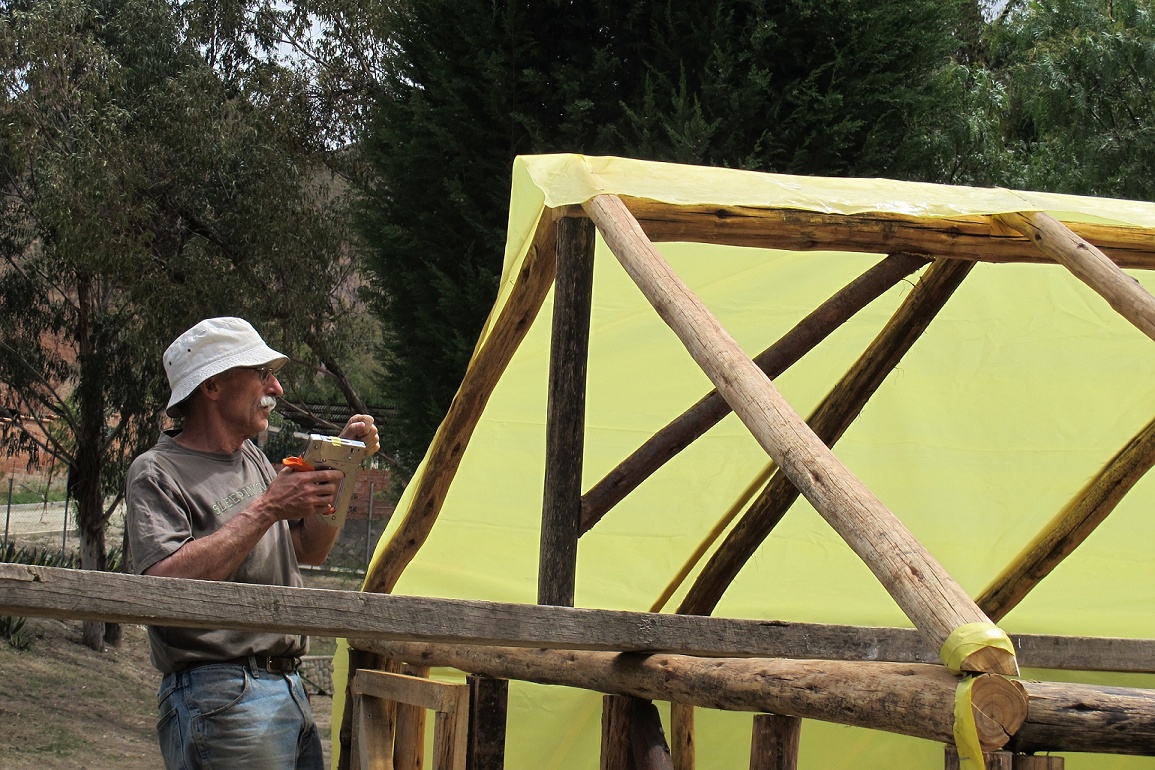
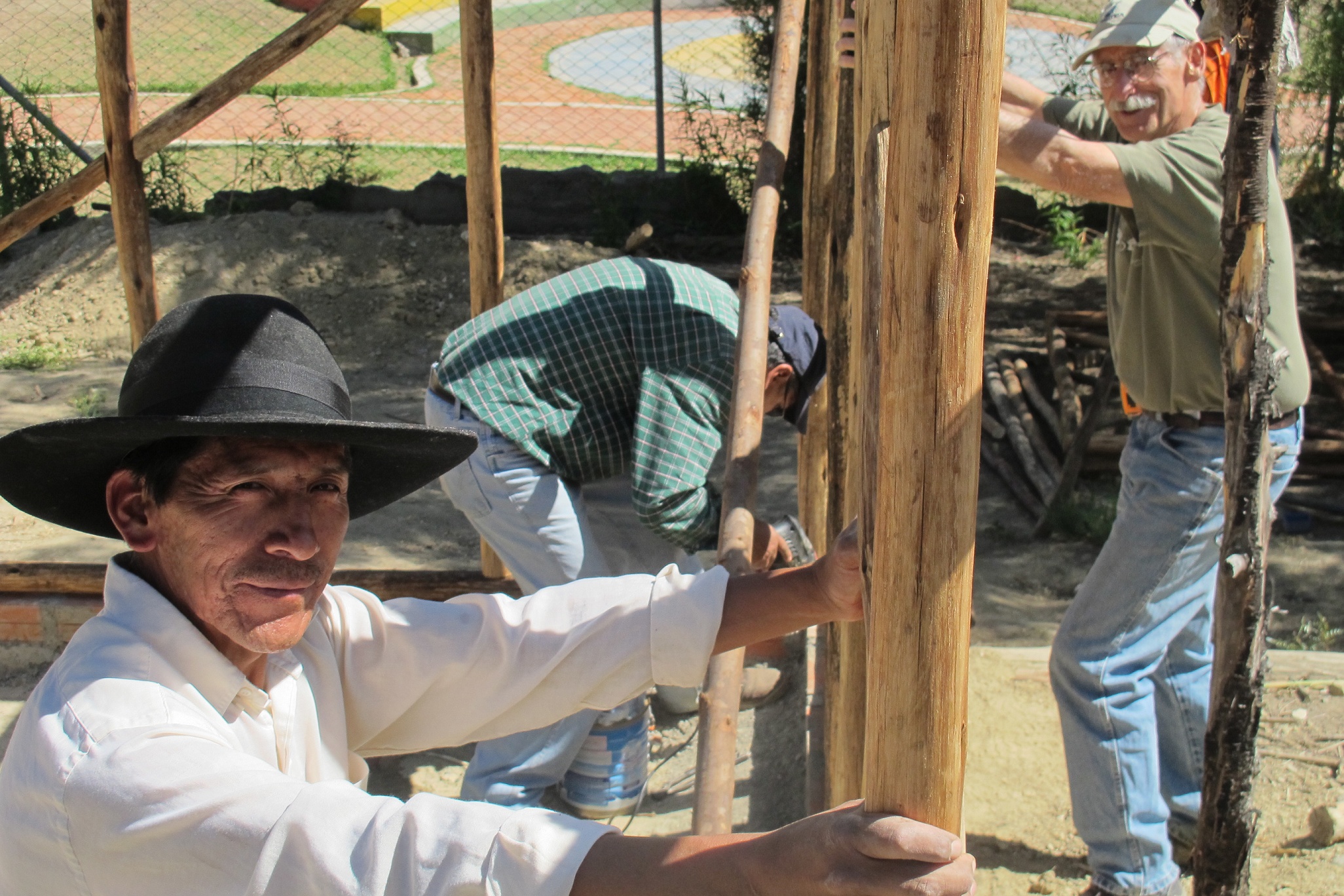
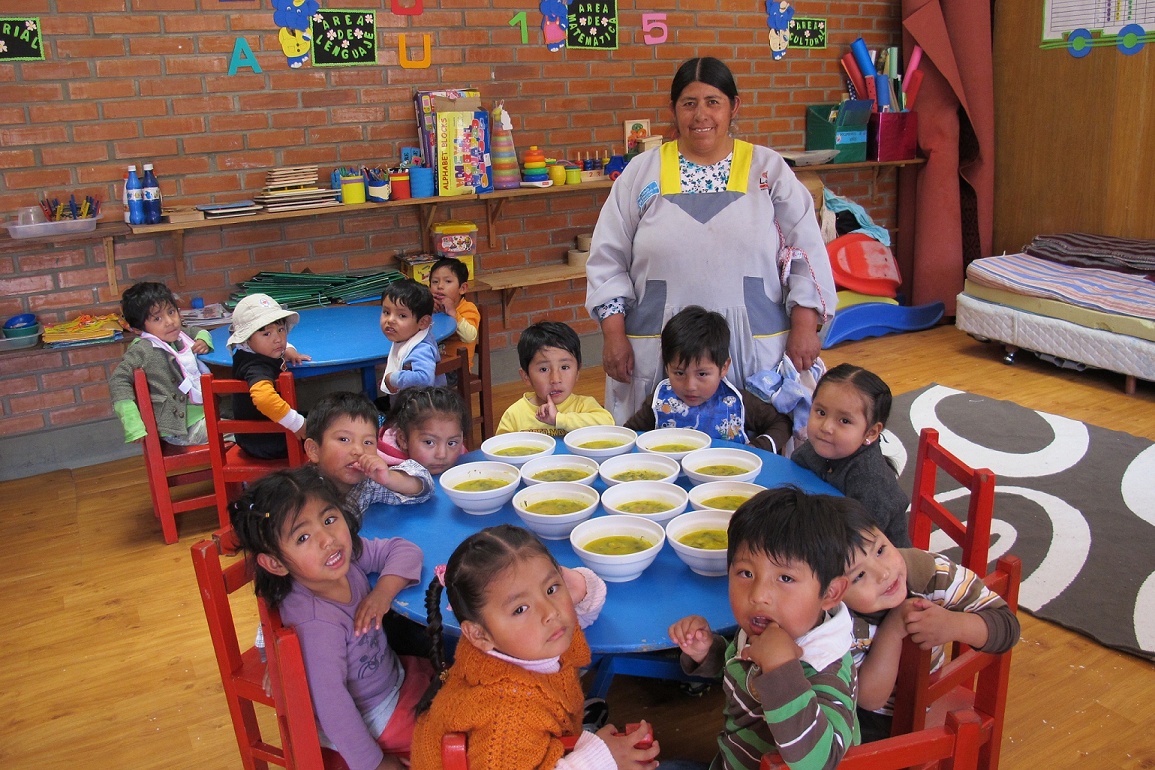
Our main responsibilities with Up Close were to work at the children’s centre, me in the kitchen helping to make lunch for 80 ninos and conducting weekly cooking classes for the Mothers’ Club, and Doug, building a greenhouse and doing a few other carpintero projects.  The staff at the pre-school were incredibly kind and welcomed us with open arms. We became great friends with the cooks, the teachers, or as they are called in Bolivia-tias, and the administrators.  Working in the kitchen with Maxima and Maria brought me the privilege of eating lunch with many of the staff and Doug, because he was my esposo,  joined us on our little stools every day at lunch, too.   

Valle de la Luna Children's Centre

Valle de la Luna Children’s Centre

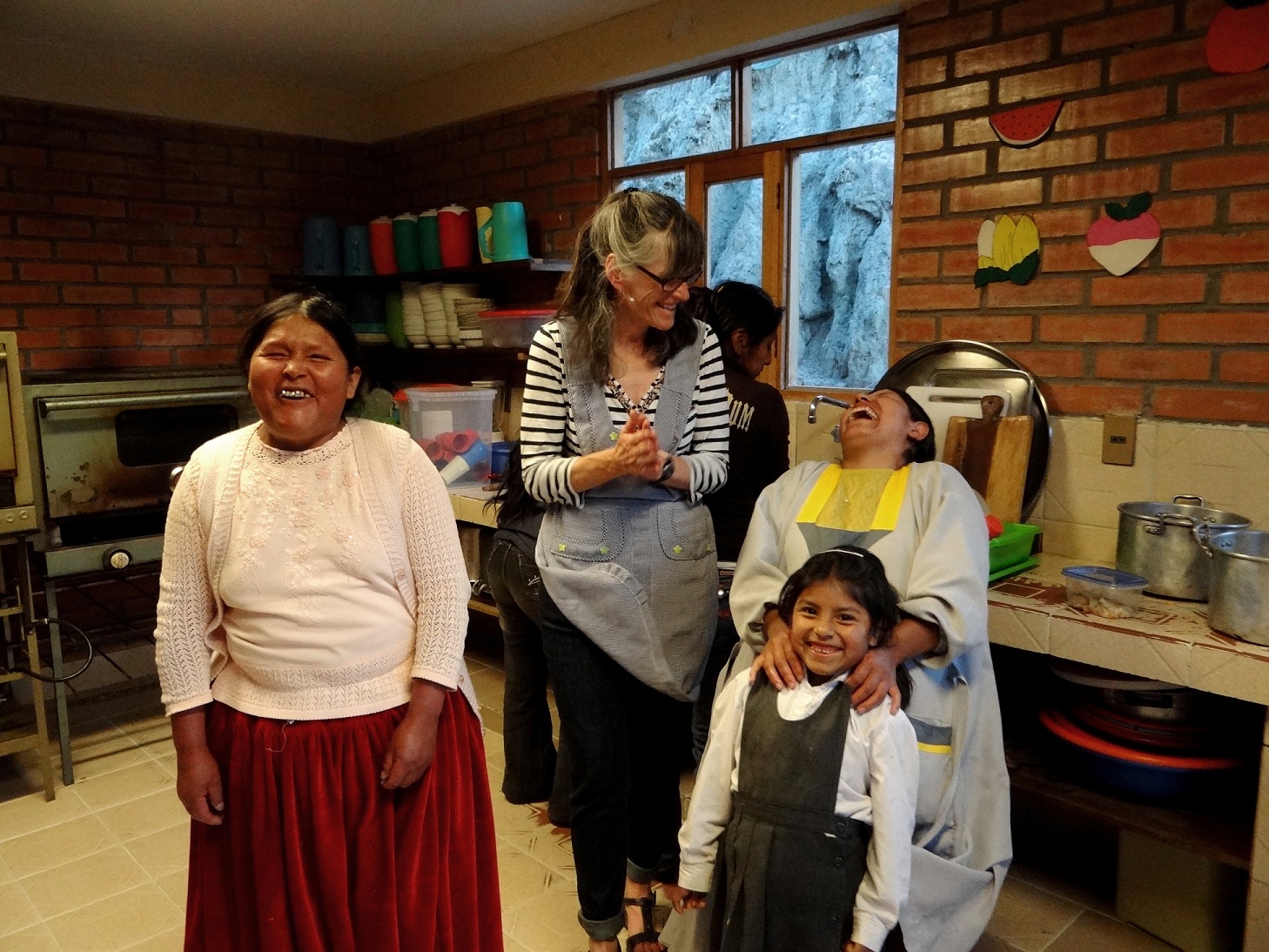
Doug making Maxima, Maria, little Patty and I laugh our heads off.

Doug making Maxima, Maria, little Patty and I laugh our heads off.


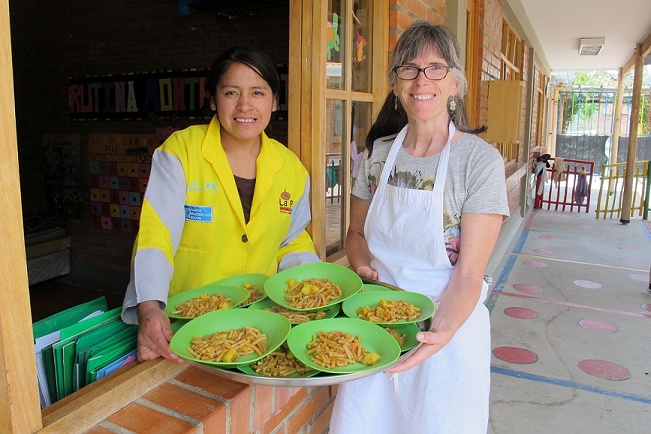
Delivering lunch to Claydee's classroom.

Delivering lunch to Claydee’s classroom.


Carpintero Canadiense

Carpintero Canadiense

Tres Carpinteros- Walter, Rolando y Dugla.

Tres Carpinteros- Walter, Rolando y Dugla.

Tia Teo

Tia Teo

Most days we were given a ride to “work” by Rolando or Emma, and would take a collectivo home.  Collectivos, or mini-vans, are the most common form of public transit in Bolivia and our ride home- about 5 Km. cost the ridiculously low sum of 1.5 Bolivianos, or about 20 cents.  Our days flowed fairly smoothly- volunteer for 6 to 8 hours, some days take Spanish class at the school next door, other days walk up the hill in Mallasa to the Oberland Hotel for a café con leche  and wifi, stop in the little shops to pick up some ingredients and make our way back to our little house.  Every day had a little surprise that brought us some huge laughs, most often involving a mix-up in the language.  Like the time I  told Maxima and Maria, the women I worked with in the kitchen, that when we are in Canada I am a maestra de cochina ( a disgusting/dirty/piggish teacher) instead of a maestra de cocina ( a cooking teacher)!  Or, one day when I didn’t  feel particularly hungry, so told them no tengo mucho hombre (I don’t have much of a man) instead of no tengo mucho ambre (I don’t have much of an appetite.)  Of course, right on que, Doug walked into the kitchen for lunch which brought on another bout of hysteria. 

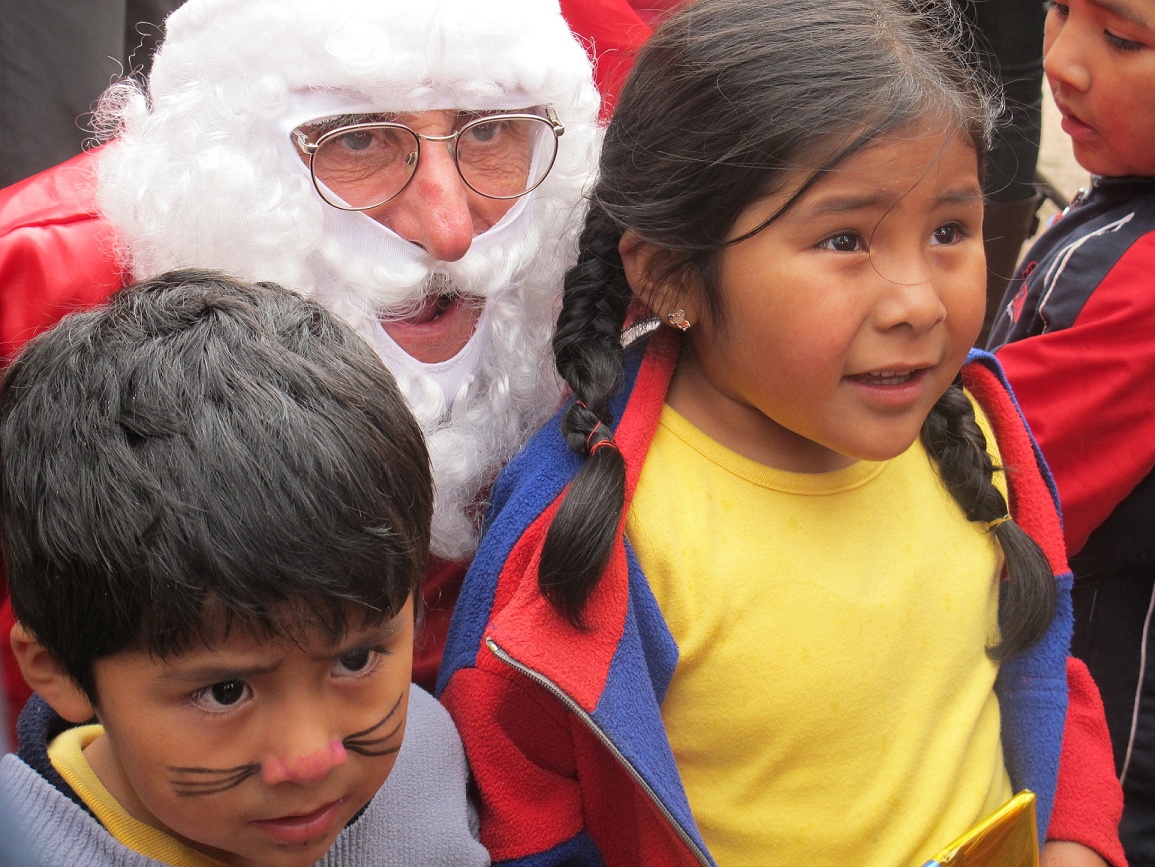
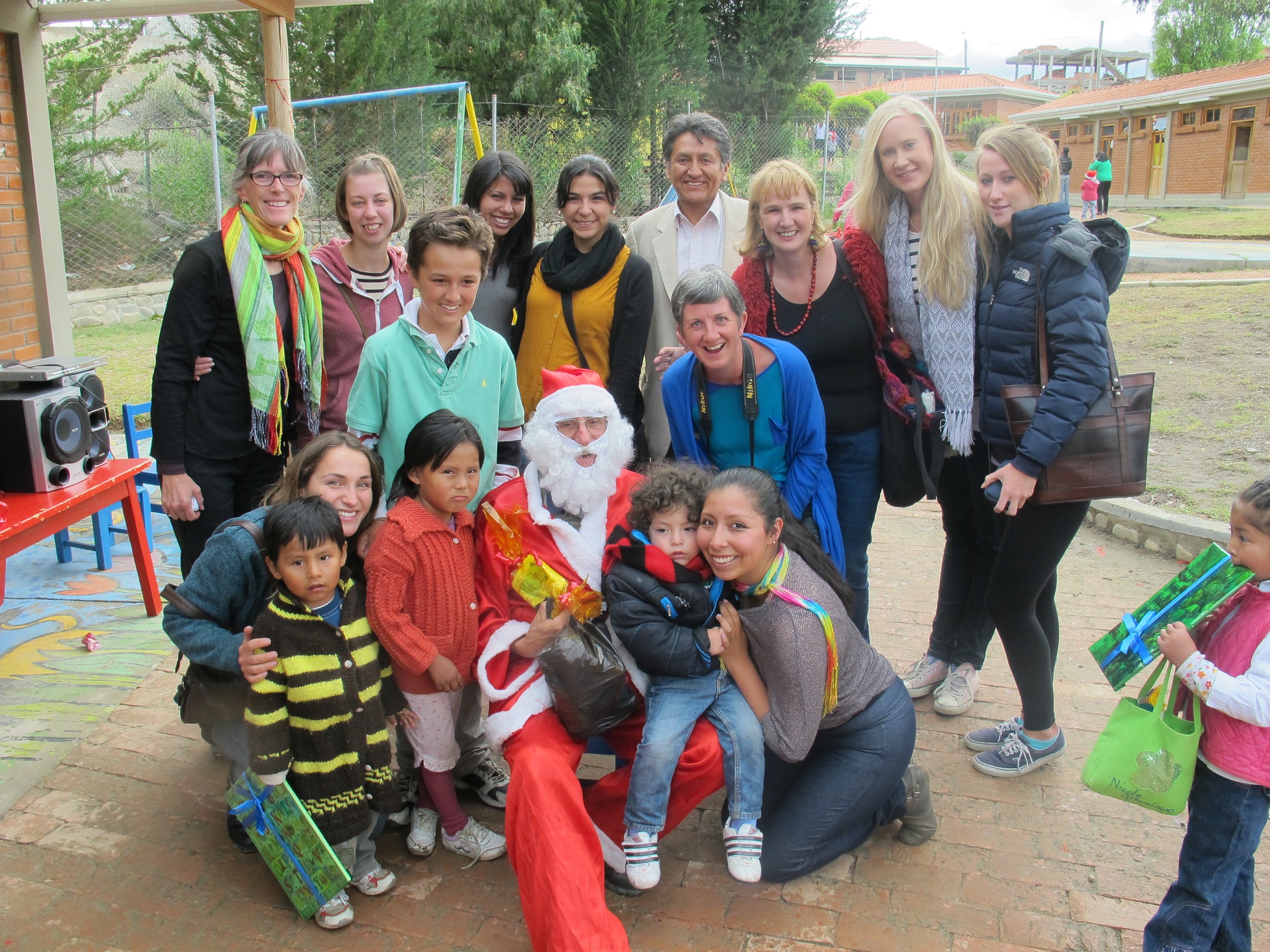
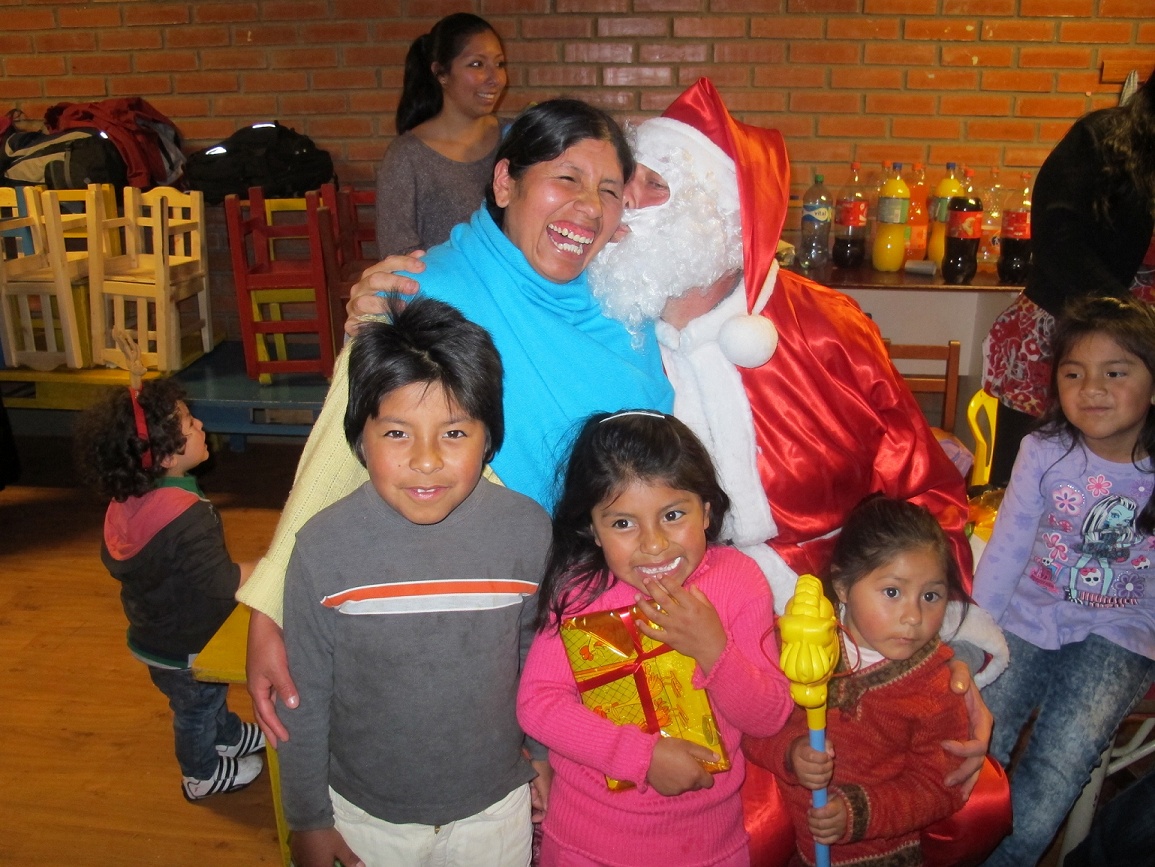
It was very difficult to leave our new family at Up Close Bolivia at the end of November, so to ease the blow, we decided to return on December 11, after a little Bolivian tour, for the annual Christmas party and dinner at the pre-school.  More importantly, we returned so that Doug could play Papa Noel and, what a great Santa he was.  The kids were thrilled, mesmerized even.

Santa 1

Papa Noel and the Up Close Team

Papa Noel and the Up Close Team

That evening there was a family dinner and the cooks put on a traditional Lechon, roast pork, with roasted potatoes, baked plantain, salsa picante and salad and we all sang Christmas carols.  Papa Noel made another appearance, but this time he was slightly taller and had a distinctly British accent.  Father Christmas, as he is known in the UK, aka, Jeremy, stole the show!

Father Christmas, the second! Is there such a thing as "one-up-Santa-ship?"

Father Christmas, the second! Is there such a thing as “one-up-Santa-ship?”

We hope to return to Bolivia in the future and work with Emma, Rolando and the rest of the gang at Up Close Bolivia again.   We fell in love with Bolivia and its people.  When we decided to travel to South America as volunteers, we thought that as volunteers, we might help to enrich the lives of others.  Little did we know that it would be our lives that would be enriched beyond measure, and so to Up Close Bolivia, we say a very heartfelt, thanks!